Category Archives: legal

A Judicial Review: Justice Sonia Sotomayor

By Marc Seltzer; originally published on May 11, 2009 at politicsunlocked.com
. .

President Barack Obama will soon name a Supreme Court nominee to fill the shoes of Justice David Souter.

Mr. Obama has stirred the pot in explaining what he is looking for in a justice, saying, “I will seek somebody with a sharp and independent mind, and a record of excellence and integrity. . . I will seek someone who understands that justice isn’t about some abstract legal theory or footnote in a case book, it is also about how our laws affect the daily realities of people’s lives, whether they can make a living, and care for their families, whether they feel safe in their homes, and welcome in their own nation. I view that quality of empathy, of understanding and identifying with peoples hopes and struggles as an essential ingredient for arriving at just decisions and outcomes.”

This is more a working man’s justice than an ivory tower intellectualism. Critics have already attacked Mr. Obama’s statement as though it sacrifices legal principles in favor of emotional sympathy. This is hardly likely, given Mr. Obama’s own background in education, role as a constitutional law professor and keen intellect, but it remains to be seen whether the issue will play into the selection of a candidate or the argument at hearings on confirmation. The overwhelming Democratic majority in the Senate may finally reduce the hearings to the pro-forma confirmation of years gone by.

Last week I profiled Justice Kim McLane Wardlaw of the 9th Circuit Court of Appeals. Another leading contender for the position is Justice of the 2nd Circuit Court of Appeals, Sonia Sotomayor. Sotomayor was nominated by President George H.W. Bush to the federal bench and promoted by President Clinton to the federal court of appeals. She received bi-partisan support in both Senate confirmation votes, however, her nomination for the appellate position was stalled in the Senate committee by Republican Senators. She was seen as too liberal for objecting Senators who saw the nomination to the 2nd Circuit as preparation for a Supreme Court appointment.

Justice Sotomayor is considered a centrist although her opponents will likely paint her as a liberal in any attempt to derail her nomination. She is fifty-four years old and was born in New York to Puerto Rican immigrant parents. She would be the first Latina Supreme Court Justice if confirmed.

In 1994 she was the trial judge in the Major League Baseball strike case and her decision against the League and its effort to hire replacements and impose a new collective bargaining agreement effectively ended the strike.

The work of judges becomes a political football game when it comes time for nominations. Already Justice Sotomayor is being criticized in the press without much consideration for her judicial ability. More to the point are a list of evaluations of Justice Sotomayor by lawyers who interacted with her in court, provided by Loyola Law Professor Rob Kar:

“She is a brilliant judge and has been mentioned as a potential justice on the Supreme Court.”

“She’s of Supreme Court caliber. She’s very smart.”

“She’s very smart and well-educated, but she comes from very humble roots and I don’t think she’s forgotten that. She’s still human. She’s an outstanding judge.”

“I liked her when she was on the Southern District of New York, but I think she’s doing an even better job now that she has been elevated to the Second Circuit.”

“She’s brilliant.”

“She’s very impressive. She has really done a good job and made a name for herself.”

“She’s usually right on target.”

“She’s very scholarly.”

“She’s really able to tackle anything. She really is a quick learner.”

“Even though she’s still relatively young, she has a very keen legal mind. She’s outstanding.”

“She’s very well-qualified for the job. She’s really very impressive.”
A Judicial Review: Justice Kim McLane Wardlaw

By Marc Seltzer; originally published on May 6, 2009, at politicsunlocked.com

. .

The selection of a Supreme Court nominee raises some obvious questions. Among them is one overall concern: will the nominee be liberal, centrist or conservative?

So called “liberals” on the Supreme Court have extended greater constitutional rights in the areas of a woman’s right to have an abortion and criminal defendants’ rights to fair process than their critics accept. “Conservative” justices have hesitated to extend constitutional protections to individuals and have at times limited the government’s ability to impose restrictions on business interests. These hot-button issues are a small fraction of the work of the Court, but they do draw lines in the sand.

Centrists have been more likely to recognize the values asserted by both liberal and conservative positions and look for justice within the complexity of conflicting rights and values.

Near the top of the list of potential Supreme Court nominees is Justice Kim McLane Wardlaw of the Ninth Circuit Court of Appeals. Justice Kim McLane Wardlaw attended UCLA Law School and began her distinguished legal career in private practice. After 16 years at the Los Angeles office of O’Melveny & Myers, she was nominated by President Clinton to the federal judiciary. She worked first as a district court judge and then as a justice of the 9th Circuit Court of Appeals, where she is today.

Justice Wardlaw was supported by Democrats and Republicans in her confirmation hearings and was initially confirmed by the Senate Judiciary Committee by unanimous vote. Then, the entire Senate confirmed her unanimously. On nomination to the U.S. Court of Appeals position her Senate Judiciary hearing support was 17-1. Then the entire Senate again confirmed her unanimously.

Justice Wardlaw’s mother is Mexican-American and her father Scottish, which made her the first Mexican-American justice to be appointed to the U.S. Court of Appeals. She would also be the first Mexican-American to serve on the U.S. Supreme Court if President Obama selected her and her nomination was confirmed.

Justice Wardlaw’s positions demonstrate centrist reasoning and pragmatism. The following brief summaries of four of her opinions demonstrate that she does not always take a classically liberal or conservative view. In Card v. City of Everett, the Justice penned a majority opinion finding that a monument displaying the Ten Commandments on city land did not constitute the city’s endorsement of a religion in violation of the First Amendment “freedom of religion” restrictions.

In another case, Roe v. City of San Diego, Wardlaw disagreed with the Ninth Circuit majority and refused to extend constitutional protection to a police officer who was fired for selling adult videos of himself. The U.S. Supreme Court agreed with Wardlaw’s dissent and reversed the Ninth Circuit decision.

In Jones v. City of Los Angeles, Wardlaw wrote that arresting homeless people for occupying public property, when other shelter was not available, violated the Eighth Amendment’s prohibition against cruel and unusual punishment.

Finally, in Allen v. Woodford, Wardlaw determined that a defendant sentenced to death would not receive a new trial despite his counsel’s failures in representation because there was overwhelming evidence of guilt such that a jury would still have sentenced him to death.

Justice Wardlaw may not satisfy those who desire certainty that every decision will reflect their political philosophy. But she is a respected moderate with tremendous high-level legal experience and the endorsement of Democrats and Republicans alike.

Evaluation of Bush Administration Assertions of Executive Branch Authority

By Marc Seltzer

Recently released documents (opens in PDF) show the extent to which the Bush administration took unprecedented power unto itself, exercising unfettered executive branch authority to conduct war inside the United States as well as abroad. Despite profound moral and Constitutional red flags, the Bush administration also sought, post-September 11, to conduct national security without oversight.

Based on the assertion of the president’s “independent, nonstatutory power to take military actions, domestic as well as foreign, if he determines such actions to be necessary to respond to the terrorist attacks upon the United States on September 11,” the administration conducted warrantless domestic surveillance and orchestrated extra-judicial detention and torture of prisoners — all within a cloak of secrecy.

As regarded through the eyes of his critics, Bush’s secrecy was an abuse of power. It went far beyond what was needed to protect military or strategic advantage, even in time of war, and hid unconstitutional and unlawful acts from review. Glenn Greenwald, writing in Salon, recently offered the observation that for eight years, “our Government secretly vested itself with the power to . . . create a whole regimen of secret laws that vested tyrannical, monarchical power in the President.” Speaking at a convention earlier this month, New Yorker contributor Seymour Hersh charged that “eight or nine neoconservatives took over our country.”

However, the administration and its supporters can point to years of domestic security that followed the September 11 attacks. Secrecy was used in an aggressive effort to protect the nation from al Qaeda and in the belief that intrusion into executive branch authority could hinder those efforts.

One could reasonably conclude that the administration officials either believed they could not risk interference of the courts and Congress in their pursuit of national security, or they operated under the premise that in this area the president has supreme authority, with checks and balances neither necessary nor desirable. Secrecy also spared the administration from facing public outcry. However, by creating secret policies authorizing domestic surveillance and detention, the administration denied the public, and the other two branches of government, an opportunity to participate in significant Constitutional deliberations.

Had the attacks on U.S. soil continued in the weeks and months following September 11, it is likely that congress and the courts would have countenanced an extreme concentration of power in the hands of the president in order to defend the nation. The Constitution is a flexible document, open to interpretation in the light of various circumstances. However, as the potential threats were nullified and weeks and months of security turned into years without an attack, the justification for secrecy diminished.  This led to at least a risk of Constitutional crisis, as the executive branch acted on new interpretations of that foundational document without congressional or judicial oversight and without a clear need for such secrecy.

The terrorist attacks in New York and Washington, D.C. justified an extensive retooling of national security policies. The executive branch was responsible for developing new surveillance, detention and military policies. The government has now had time to implement new programs, not to mention conduct major foreign wars. Just as it wasn’t the same world on September 12, 2001 that it had been two days before, today it’s no longer the same world that it was on September 12, 2001. President Bush’s decisions with respect to executive branch authority, and the policies of surveillance, detention, and secrecy that resulted, are now being subject to scrutiny.  While there will undoubtedly be partisan acrimony as opponents of the Bush administration allege violations of the law, there are fundamental constitutional questions about the authority of the executive branch to act on new interpretations of the constitution without oversight that must be explored.

Immigration 2009

By Marc Seltzer; originally published on March 19, 2009 at care2.com

. .

No Easy Answers

The announcement that President Barack Obama will begin a public discussion of immigration reform in May will reawaken debate on a highly contentious issue.  At core, the issue pits those fiercely opposed to allowing illegal residents in the United States to convert their status to legal residency against those who, albeit with conditions, seek to legalize most of the U.S.’s estimated 12 million illegal residents.

Political Risks

If the President follows his campaign position in seeking a legislative solution that includes offering legal status to those in the country illegally, he will be investing his political capital in an extremely divisive issue at great political risk.

Prior to the 2008 election in which Democrats gained in both houses of congress, anti-illegal immigrant forces had the upper hand.  While Democratic gains make the congressional votes for reform more plausible, the economic crisis and growing unemployment will intensify concern that giving illegal residents the opportunity to obtain legal status will make already-difficult competition for jobs that much worse.

The President will have his hands full with this one and risks a political fight of an uglier, nastier and more divisive nature than even the financial turmoil has wrought.

Increasing Attention and Concern

The economic crisis and growing unemployment is likely to increase opposition to immigration generally and make compromise more difficult.  However, some commentators such as Thomas Friedman, in his NY Times column, have noted that allowing more legal immigration could bring wealthy immigrants eager to buy homes, shoring up the contracting real estate market.

Illegality is troubling, but what are the alternatives?

Illegal immigration presents the difficult combination of illegal entry into the United States, perceived competition for jobs, and use of public resources that is a too-bitter pill for many Americans.  Yet with nearly 12 million illegal immigrants residing in the United States, it is difficult to realistically imagine a solution that does not involve granting some form of legal status.

One approach would be to grant permission to work for a period of years, without giving traditional legal permanent residency, which begins a path towards citizenship.  However, advocates of a path to citizenship for illegal immigrants, recognize that people who have effectively moved to the U.S., will likely be in financial and family jeopardy if they are forced to leave after having lived for five, ten or more years in the United States.  This type of compromise has not received significant support from immigration opponents, either, who chafe at the idea of rewarding those here illegally with any form of legitimate legal status.

Reagan’s Leadership, or a matter of time?

One thing is certain, poor management of the immigration issue in the past has set up a nearly impossible predicament in the present.  Congress could have largely managed the issue by raising legal immigration quotas sufficiently to keep up with the needs of employers during the 1990s and first decade of the new century.   Instead, the demand for labor far outstripped the legal supply and the debate shifted to unrealistic proposals of effective border enforcement on the one hand and mass deportation on the other.

In the end, Obama’s political skill and the Democratic congressional majorities may forge a “legalization” solution, much as Ronald Reagan did in 1986.  However, the opposition will be charged, and losing control of the issue could not only lead to defeat of immigration reform, but chip away at the President’s momentum and, so far, commanding authority.  While both sides in the debate should compromise and seek to offer creative solutions to the real problems that exist, within their principles, there will be those primarily looking to use the issue against Presidential authority and to position candidates for the 2010 congressional elections.

What to expect, at least initially

President Obama will likely push for a legalization process that aims to implement legal status after the recession eases and the unemployment rate declines.  Mr. Obama is opening the debate in May, and it would not be a surprise for legislation enacted in 2009 or 2010 to provide opportunities for legal status in 2010, 2011 or 2012, when employment is predicted to increase, if the recession ends.

Any proposal is likely to impose penalties and conditions as an attempt to deal with and discourage “unlawful” entry and residence.  More today than in the past, surveillance technology at the border and electronic identification procedures in the workplace make future enforcement of immigration laws possible, although by no means guaranteed.

UPDATE: In Immigration Solutions I push towards a compromise and ask both sides if they are willing to meet half way.  Whether it was because his hands were full with health care of because the prospect for immigration reform legislation was not good, President Obama has put off immigration legislation for at least a year.  In a later post I will review what is going on in enforcement and changes that result from the economic downturn with respect to illegal immigration.

Closing Guantanamo Bay

Originally published on February 9, 2009, at politicsunlocked.com

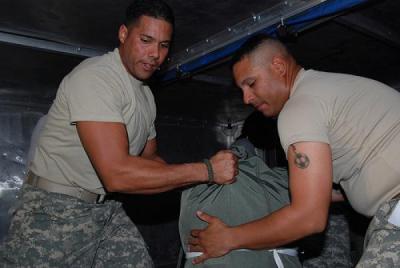
Photo: Puerto Rico National Guard troops pack it in after a year's deployment at Guantanamo; The National Guard; licensed under creative commons

Photo: Puerto Rico National Guard troops pack it in after a year's deployment at Guantanamo; creative commons http://www.flickr.com/photos/thenationalguard/3229073306/in/photostream/

President Barack Obama has signaled that the U.S. military will close Guantanamo Bay detention camp within one year.  The prison has become a divisive symbol of the controversial handling of enemy combatants by the Bush administration’s War on Terror. 

President Obama has shifted responsibility for the remaining 245 Gitmo prisoners from the Defense Department to the Justice Department.  Newly appointed Attorney General for the United States, Eric Holder, Jr., will take responsibility for determining whether those prisoners will be given civil or military trials, transferred to foreign countries or released.

The outlines of the President’s new policy on detention will be filled in in coming months, but certain things are clear.

The President has forbidden the use of torture against detainees in American custody.  “The United States will not torture,” the President stated.  

This policy includes prisoners under CIA control, and while extraordinary renditions will be allowed to continue during the Obama administration review of policy, the CIA will not be allowed to transfer prisoners to any country where they will be subject to torture.  

Outgoing CIA chief Michael Hayden sent a message to staff at the agency stating that the new policy would be carried out, “without exception, carve-out or loophole.”

Holder’s justice department has begun review of enemy combatant court cases beyond Guantanamo Bay, such as that of Ali Al-Marri, held at a military brig in North Carolina.  Al-Marri has appealed to the United States Supreme Court for review of the Defense Department’s decision to imprison him without trial.  Al-Marri was living in the United States as a legal resident at the time of his arrest, giving him a stronger position to seek a trial than, say, an enemy combatant captured by coalition forces in Afghanistan.

However, the Obama administration sought a postponement of hearing by the Supreme Court.  Al-Marri “is clearly a dangerous individual,” Obama has said. “We have asked for a delay in going before the Supreme Court to properly review the evidence against him.”  

The Bush administration had also decided to close the Guantanamo Bay facility, but ran into difficulty finding new places to house the remaining detainees.  Bush policy was to hold enemy combatants without trial or transfer them to foreign countries for incarceration.

However, the U. S. Supreme Court has ruled that all Guantanamo detainees are entitled to habeas corpus, or, the right to petition a federal court for review of the decision to imprison them.

Recently, a federal court in Washington D.C. ordered five Algerian detainees to be released for lack of sufficient evidence against them.  Other detainees have been caught in legal limbo because the United States would like to release them to their native China, but are constrained by the probability that they will be subject to ill treatment or execution if returned, because of their opposition to the Chinese regime.

The Obama administration will also deal with the question of detainees held in U.S. military custody abroad, such as those held at the Bagram base in Afghanistan.

These prisoners were captured in military operations and are thus more like traditional enemy combatants, but some have been held for as long as eight years and there is still no end in sight for conflict in Afghanistan.

From a policy perspective, Obama’s intent to increase U.S. troops and coalition commitments in Afghanistan soon, will likely result in more enemy combatant prisoners, going forward.

A Strong and Clear Decision by the Supreme Court and a Legal Black Eye in Tennessee

Originally published on January 29, 2009, at care2.com/causes/women’srights/blog

1029844_431


Rejecting the tortured logic of a decision of the United States Court of Appeals for the Sixth Circuit (KY, TN, OH, MI), the U.S. Supreme Courthas ruled that a woman fired for cooperating with an internal investigation of sexual harassment is entitled to protection from federal law. 

Vicky Crawford, a 30-year-old payroll-department employee of theMetropolitan Government of Nashville and Davidson County was interviewed by the county’s legal staff in the course of an inquiry into sexual harassment allegations.  Crawford did not file a sexual harassment complaint herself, but did provide evidence of harassment during the inquiry into rumors that a county director had harassed another female county employee.  After cooperating in the investigation, Crawford was terminated.

Protection under the Civil Rights Act of 1964

Crawford then filed suit claiming the protections of the Civil Rights Act of 1964, which protects employees from retaliatory firing for complaining against or opposing unlawful discrimination.  A federal judge and eventually the Court of Appeals sitting in Nashville rejected Crawford’s claim, ruling that the Civil Rights Act of 1964 protects only people who actively oppose discrimination, filing formal complaints or seek to give evidence, but that merely cooperating in an investigation which results in firing is not enough to deserve the law’s protection. 

The U.S. Supreme Court, in a unanimous decision, reversed the Court of Appeals, ruling in Crawford’s favor.  Justice  David Souter sharply rejected the lower courts’ reasoning, offering as much a rebuke to the judges below as the ever-respectful high court is want to do.  Souter called “freakish” the courts’ interpretation of the law that cooperation in an investigation, resulting in termination, is insufficient to merit the protection given to those who oppose discrimination by taking action such as filing a complaint or suit. 

The High Court’s Reasoning 

The Supreme Court essentially said that if the action taken by the employee against unlawful harassment was enough to get her fired, it must have been enough to qualify as “opposing” unlawful discrimination under the “opposition” protection of the Civil Rights Act.  It would be ludicrous to say that she was fired for what she did, but that what she did wasn’t action enough to trigger legal protection against firing.  

The sixth circuit’s interpretation was remarkably narrow and not one likely to have come from the United States Court of Appeals in other districts.  In any case, the lower threshold for what constitutes protected “opposition” is now the law of the land, and the logic of the decision should apply beyond sexual harassment cases to unlawful employment practices covered by the Civil Rights Act. 

A Clear Message

Despite statements from both sides of the political spectrum that the U.S. Supreme Court is irreconcilably split, the high court does as times speak with one voice.  In this case, there should be no doubt what the court is saying to American workers:  The government stands on the side of those who oppose or give evidence against illegal discrimination.

See the text of the court’s decision and Justice Alito’s concurring opinion in Crawford v. Metropolitan Government of Nashville and Davidson County, Tennessee at www.supremecourtus.gov.

Bush’s Final Act

Originally published at http://www.politicsunlocked.com


thumbnail-1php4

Exercise of presidential power to commute controversial sentences.

President George Bush ended the imprisonment of two former federal border guards, Jose Compean and Ignacio Ramos, convicted in the 2005 shooting of an unarmed drug dealer as he fled across the Mexican border.

Each man had been sentenced to more than a decade in prison, not only for the shooting, but also for covering up their actions, tampering with evidence and filing false reports.

Implications for Border Enforcement

The trial and subsequent convictions in 2006, unleashed a wave of controversy as supporters of the men argued that they were too harshly, or wrongly punished for seriously injuring the illegal-alien drug runner. During a period when many in the border states demanded stricter border enforcement, advocates for the men saw the prosecutions as protecting illegal immigration and punishing aggressive border enforcement.

Law Enforcement and the Use of Deadly Force

The lead prosecutor in the case, U.S. Attorney Johnny Sutton, rejected sympathy saying that the law does not allow the use of lethal force against someone fleeing, unless the lives of the officers or the public are put in danger.  

“These agents shot someone whom they knew to be unarmed and running away,” said Sutton.

Were the sentences too harsh as some have argued?  Should President Bush have overridden the judge’s discretion and given the men their freedom?

In commuting Compean’s and Ramos’ sentences, rather than giving each a full pardon, Bush has seen that the men will soon be released from prison, but will still be responsible for fines and meeting probation obligations. 

Challenging Obama’s Presidency

Originally published December 22, 2008, at politicsunlocked.com


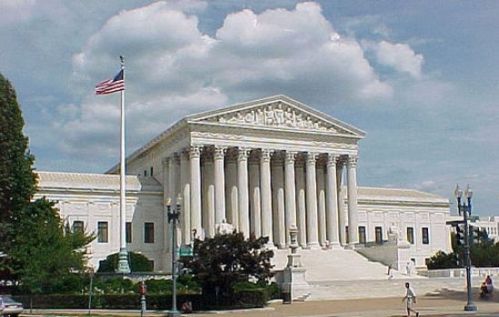
United States Supreme Court

United States Supreme Court

Photo by dbking licensed http://creativecommons.org/licenses/by-nd/2.0/


A little known aspect of the judicial system was made a bit more public recently, as courts have rejected lawsuits challenging the legitimacy of Barack Obama’s presidential election.

Anthony Martin-Trigona, a documented legal system abuser, did it again, filing a lawsuit regarding Obama’s citizenship in Hawaii state court. Federal courts have already imposed rules barring him from bringing any more frivolous claims to their courts.

federal appeals court has previously described Martin-Trigona’s actions and called out the harm caused by people who use our justice system for their own personal agenda without regard to the legal validity of their claims.

“To those who follow the business of the courts, the appellant needs no introduction. He is the source of literally hundreds of lawsuits, motions and miscellaneous pleadings, all but a small fraction of which lack any merit whatsoever. Viewing Martin-Trigona’s litigious conduct in its entirety yields the inescapable conclusion that he persistently resorts to legal processes without regard to the merits of the claims asserted and that he invokes those processes largely to harass persons who have unluckily crossed his path.”

And the 2nd Circuit Court of Appeals continued:

“Martin-Trigona is known to have filed over 250 civil actions, appeals, and other matters throughout the United States, which have been pursued with ‘persistence, viciousness, and general disregard for decency and logic.’  He has used legal pleadings to ventilate his contempt and hatred of persons of Jewish heritage and to level accusations which ‘have often been personal, have often emphasized racial or religious affiliations, and have often involved the members of . . . judges’ and counsel’s families.’ The purpose, nature and effect of his resort to multiple litigation has been to involve as many persons in as many confounding legal processes as possible. . . . Martin-Trigona’s voluminous filings have ‘inundated’ the District of Connecticut and his activities have burdened judicial operations to the point of impairing the administration of justice. Finally, Martin-Trigona has not desisted from his course of vexatious litigation but has expressly stated his intent to file yet more actions.”

Fox News put Martin-Trigona on the air during the campaign to impugn Obama.  The real offense, political positions aside, was that a person known for such extensive and frivolous abuse of the American legal system was given the credibility of broadcast time.

But he is not alone.  Seventeen lawsuits (so far) have been filed in various jurisdictions, claiming Barack Obama was not born a U.S. citizen, and thus, cannot become president.

The facts:

Hawaii achieved statehood in 1959.  Obama was born in Hawaii in 1961.   Obama’s birth certificate, conveying U.S. citizenship and noting birth in Hawaii’s capital, Honolulu, has been examined by the State of Hawaii and found to be authentic.

Case closed.

None-the-less, seventeen individuals have filed suit, and upon rejection of their claims by trial judges, haveappealed as high as the U.S. Supreme Court.  The legal basis of the challenges is Article II of the U.S. Constitution, requiring a president to be a natural-born citizen.  Precious resources are used, briefs read, arguments heard, all to give every possible advantage to litigants who want their day in court.  To date, the U.S. Supreme Court has rejected two petitions that have made it to the court for consideration.

The “natural-born citizen” clause has received publicity in recent years with California Republican GovernorArnold Schwarzenegger, who is an Austrian-born, naturalized U.S. citizen, appearing to emerge as apresidential hopeful, except for Article II.  Discussion was also prompted by the candidacy of Republican Presidential aspirant John McCain, was born in the Panama Canal Zone to a U.S. military family.  McCain, however, was a citizen at birth, via his parents, both citizens and the status of the U.S.-controlled Canal Zone.

Can you imagine challenges to the birth certificates of George W. Bush, William Jefferson Clinton, George H.W. Bush, or Ronald Reagan? 

Boumediene v. George W. Bush

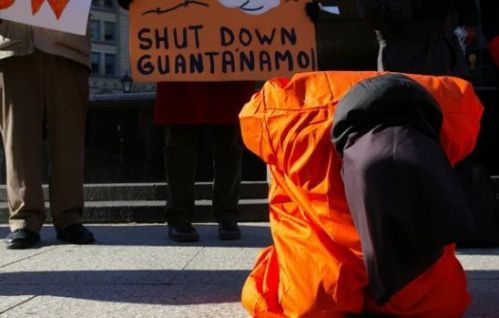
Protesters at the U.S. Supreme Court Wearing Prisoner Jumpsuits

Protesters at the U.S. Supreme Court Wearing Prisoner Jumpsuits

Originally published December 29, 2008 at politics unlocked.com.


In a significant enemy combatant case, Boumediene v. George W. Bush, five men, who have been held at Guantanamo Bay detention facility, have been ordered to be released, while one continues to be detained.

The five released, who had previously been denied an opportunity to challenge their detention in court, owe their freedom in part to a Supreme Court decision earlier this year granting Guantanamo Bay detainees the right of habeas corpus, to challenge their detention is U.S. courts.

After the Sept. 11 attacksPresident George W. Bush, guided by Vice-President Richard (Dick) Cheney and Defense Secretary Donald Rumsfeld, adopted aggressive defense strategies to deal with the nation’s security.  While the administration’s geopolitical approach was to demand cooperation from foreign powers, and eventually to conduct wars in Afghanistan and Iraq, the administration also needed to handle the enemy one by one.

The attacks had shown that a small number of individuals using the element of surprise could cause extraordinary destruction and loss of life.  Fearing more attacks, the administration ramped up its world-wide hunt for terrorists.  As arrests were made, the Bush administration created new procedures for placing those captured into U.S. military detention facilities rather than providing them with the opportunity for civil or military trials.

It was often said that the worst of the worst were placed in a U.S. military prison facility at Guantanamo Bay, Cuba.  The administration took the position that prisoners at this facility were not entitled to a trial or the right to challenge their detention in U.S. courts.  In many cases, the U.S. government refused to allow lawyers to contact prisoners and rarely released the names of persons being held.

Concerned that some prisoners were wrongly held or were subject to torture, yet lacking a good alternative, civil libertarians, lawyers groups, family and friends staged theatrical photo ops outside the Supreme Court, argued their cases in the press and lobbied the government of behalf of the detainees.

Meanwhile, legal appeals to the administration’s position have slowly worked their way through the courts and gradually defined what rights detainees do have.  The courts have not rubber stamped the Bush administration’s plans and have significantly increased the rights provided to detainees.

The Supreme Court ruled in 2008 that Guantanamo Bay detainees have the right of habeas corpus to challenge the legality of their detention.  This right provides judicial review of the government’s decision to designate and hold someone, but does not expressly provide the constitutional protections of a criminal trial.  Further, the Court in another detainee case, Hamdi, indicated that the courts have an obligation to protect prisoners from the risk of erroneous detention.

Under the Supreme Court ruling, six men were given a new hearing before U.S. District Court Judge Richard Leon in Washington, D.C.  They had all been in custody since 2001, when they were arrested in Southern Europe by the Bosnian government for alleged involvement in a plot to bomb the U.S. embassy in Sarajevo.  They were subsequently turned over to U.S. authorities and sent to the U.S. Naval Station at Guantanamo Bay.

A Bush administration appointee, Judge Leon conducted the hearings in private because of the presence of classified information, but the order of the court made public a number of issues in the case.

The Bush administration argued that the defendants had a plan to travel to Afghanistan and fight U.S. and coalition forces there. They made no claims regarding the previously alleged embassy plot.

The detainees, Lakhdar BoumedieneMohamed NechlaHadj BoudellaBelkacem BensayahMustafa Ait Idir, and Saber Lahmar were represented by counsel, who argued that the government had failed to show the six Algerian-born men were enemy combatants.

The Judge first defined an “enemy combatant” as “an individual who was part of or supporting Taliban or Al Qaeda forces, or associated forces that are engaged in hostilities against the United States or its coalition partners.  This includes any person who has committed a belligerent act or has directly supported hostilities in aid of enemy armed forces.”

Judge Leon concluded that the government failed to meet its burden of convincing the court that a plan existed.  The court did not fully elaborate on the reasons for its decision, noting that classified material could not be revealed.

None-the-less, Judge Leon granted the five habeas petitions and ordered those prisoners’ be released.  The court also ruled that a sixth defendant was in fact an enemy combatant based on evidence showing ties to Al Qaeda that was not present in the case against the other five petitioners.  The sixth defendant will remain in military custody.

Photo licensed: http://creativecommons.org/licenses/by-sa/2.0/

Detainee Ali Al-Marri Appeals

Originally published at politicsunlocked.com

thumbnail-3php

photo: creative commons

Supreme Court agrees to hear enemy combatant case.

The United States Supreme Court has agreed to hear the legal appeal of a man imprisoned without trial as an enemy combatant.

The case presents a rare situation where a person suspected of working for the enemy, in this case Al Qaeda, was arrested inside the United States and is being treated like a battlefield capture.  The man, Ali Al-Marri has not been charged with an act of terrorism or any other crime in U.S. courts, although the government has presented a statement of evidence against him.  According to the government’s declaration, Al-Marri met withOsama Bin-Ladin and was instructed to enter the United States to conduct an act of sabotage against financial institutions.

Since operation Enduring Freedom (the U.S. military action in Afghanistan) began in 2001, thousands of Al Qaeda members captured overseas have been imprisoned as enemy combatants.  This is a common practice in armed conflicts and is recognized by international law.  Al Qaeda members have also been arrested in the United States for crimes committed here, such as the 1993 World Trade Center bombing.  In those cases, defendants were charged with crimes and afforded trials according to the rules of our criminal justice system.

The present case is, however, a hybrid.  

Ali Al-Marri was living with his wife and children in Peoria, Illinois and attending computer classes at Bradley University, when he was arrested in 2001.  He was originally treated like a criminal suspect and was incarcerated while awaiting trial.  However, before his trial occurred, he was reclassified by the Bush administration as an enemy combatant and moved from the civilian court system to a South Carolina military prison.  As an enemy combatant, he was not given a trial and was told he may have to wait until the end of the war to be released.

There are two central legal principles in this case.  

First, the executive branch is constitutionally invested with the power to conduct war and secure the national defense. Within this power are decisions about how to handle the capture of enemies.  The judiciary, not the branch of government suited to speed or action, gives the president almost complete authority on such matters of national defense.  In a previous case on detentions, the Supreme Court allowed an American citizen, whose battlefield capture in Afghanistan demonstrated his Al Qaeda affiliation, to be imprisoned as an enemy combatant, stating “detention to prevent a combatant’s return to the battlefield is a fundamental incident of waging war.”

Secondly, because the arrest of Al-Marri was made in the United States, there is serious judicial concern about his detention without trial in light of our national principles of constitutional justice.  The right to confront witnesses against you and be tried by a jury has long been fundamental to our system of justice.  These rights, guaranteed in the Sixth Amendment to our Constitution, were viewed as fundamental by our nation’s founders, who feared the power of Kings and abusive governments to condemn and imprison their political enemies unjustly.

Attorneys for Al-Marri have challenged his detention without trial through a writ of habeas corpus.  This allows Al-Marri to challenge the government’s legal authority to treat him as an enemy combatant. The Court of Appeals for the Fourth Circuit ruled in a 5-4 split decision that the government does have this authority, under the Authorization for Use of Military Force against Terrorists passed by Congress in 2001.  Al-Marri’s Supreme Court petition asks the high Court to overturn the Fourth Circuit decision and reject the government’s enemy combatant classification of him, making him eligible for trial.

While the evidence against Al-Marri and the fairness of process have also been challenged, these questions are still in stages of review by the lower courts.  Thus, the Supreme Court has only, at this point, focused on whether the government has legal authority to detain Al-Marri without trial, rather than any consideration of what evidence should be required in order to do so.


While the case is not likely to apply to many individuals, it certainly has very important implications.  Historically, America is well aware of the internment of Japanese Americans without trial in World War II. A 1980’s court challenge to the government’s WWII internment practice called into question whether the government had been honest in its claims about the risk that Japanese Americans posed, including in representations to the U.S. Supreme Court during the war.

On the other hand, the experience of the government in the 1990’s, prosecuting Al Qaeda operatives responsible for the 1993 World Trade Center bombing, illustrated the great economic cost and commitment of resources required to process just a few individuals through the criminal justice system.  


Originally published at: http://www.politicsunlocked.com/item/detainee-ali-al-marri-appeals