Category Archives: politics

Making the Grade

Along with banks, foreclosures, and jobs, education stands as a key focus of President Barack Obama’s vision for restoring prosperity in America. To address the immediate crisis, the president emphasized that he would direct public funds to banks, shovel-ready infrastructure, and state budgets, including funding for teacher’s jobs. In the long run, though, public investment in education will be even more central to reinstating American prosperity and leadership among nations.

Obama’s recently passed Economic Recovery and Reinvestment Act of 2009 allocated one hundred billion dollars in aid to education, including substantial investment in building new schools and shoring up resources like student loan and grant programs. Beyond the funding, what is Obama’s education philosophy?

The president’s education agenda is not so much a radical break from the past as it is a radical commitment of resources to support publicly funded education. Obama’s program embraces the standardized testing imposed by the Bush administration, but seeks to add funding to improve and support programs envisioned, but not budgeted for, in Bush’s No Child Left Behind legislation.

While the Bush administration sought to move toward competition among schools through support for private school vouchers as a way out of problems in public schooling, the Obama administration seeks to invest in and better manage the public system.

The President’s agenda is outlined on the administration’s website. The plan for grades K-12 includes the following steps:

• Reform No Child Left Behind

• Support High-Quality Schools and Close Low-Performing Charter Schools

• Make Math and Science Education a National Priority

• Address the Dropout Crisis

• Expand High-Quality After school Opportunities

• Support College Outreach Programs

• Support College Credit Initiatives

• Support English Language Learners

• Recruit Teachers

• Prepare Teachers

• Retain Teachers

• Reward Teachers

The hundred billion stimulus dollars earmarked for education will likely prove only a down payment on these goals, but Obama’s belief seems to be that education prepares the work force for the kind of business, academic, government, and creative leadership that will be necessary to compete in the global market place.

In Obama’s recent address to Congress, he received a standing ovation when he said his goal was to have a greater percentage of students graduating college in the United States in 2020 than anywhere else in the world. This would be a notable accomplishment, as American schools have lost the edge in certain key areas during the past twenty-five years. Math and reading scores among twelfth-graders have slipped appreciably, and the percentage of black and Latino students who fail to graduate from high school continues to dismay.

Obama has appointed Arne Duncan, formerly Superintendent of the Chicago School District, as his Secretary of Education. With one hundred billion dollars to spend and a chief executive commited to prioritizing American education going forward, one anticipates that Duncun will be an important voice in domestic policy in the coming years.
Health Care on the Horizon

Originally published November 17, 2008

President-elect Barack Obama made health care reform a central tenant of his campaign. The fact that so many Americans are not covered and that coverage is so costly for those who are, brought the public together behind Obama’s call for change.

Recent polls confirm a substantial consensus for government action on health care.

Ninety-two percent of Obama supporters, 88 percent of undecided voters, and 57 percent of McCain supporters in an August 2008 WorldPublicOpinion.org poll, recognized that the government bears some responsibility for the health care of its citizens. This may not be a call for nationalized health care as was toyed with during the Clinton administration, but it does signal government involvement in a health care solution will be welcomed. 69 percent of respondents also said the government was “doing a poor job” ensuring basic health care needs are met.

Obama’s proposals, voiced prominently during the campaign, call for federal regulation of insurers and public spending to help uninsured Americans obtain coverage. Keys to any new legislation are likely to be mandatory coverage for pre-existing conditions, tax credits for small businesses that insure their employees, fees for large corporations who don’t, coverage of all children and subsidies for those that need help with premiums.

Obama estimated the costs of reform to be $50-65 billion and suggested that a repeal of Bush tax cuts for upper income Americans would offset increased spending in the federal budget.

The real question now is what shape health care reform will take in light of the financial crisis. President-elect Obama has put economic recovery at the top of his agenda and hinted that other issues will be considered in this light.

The concern on health care reform is that tax increases for the wealthy and for some businesses could negatively impact economic growth. With economic indicators bleak, and all eyes on fiscal stimulus, the country can ill-afford to burden any segment of the economy.

Health care policy experts are speculating on a limited phase-in of reforms, with insurance for children touted as a first step. Longtime advocates for reform, such as Senator Ted Kennedy, are preparing draft legislation in time for inauguration day on January 20th, 2009.

The new president is all about pragmatism, so he will undoubtedly consider any potential harm to the economy before taking action. However, there is reason to expect progress on health care.

Obama has spoken passionately about health care from the very beginning of his campaign and has stated how crucial it is to improving the lives of middle class Americans. His own mother faced “preexisting illness” denial-of-coverage issues for treatment of her terminal ovarian cancer.

This President will begin his term with a substantial electoral victory, strong majorities in the Senate and House of Representatives, and public opinion in support of government action.

This is a mandate for change and the power to see it through.

Changing Global Priorities

Our new foreign policy must prize cooperation over competition.

Barack Obama took office fifty-one days ago, assuming the presidency during a crucial time for American foreign policy. Instability in key areas is on the rise, and the economic contractions around the world are likely to bring unrest, violence, and change to a degree previously thought impossible.

The United States may be tempted to face the nations of the world with the same preferences and policies as before. A different party is in power now, but aside from his position on the war in Iraq, President Obama has not yet voiced foreign-policy positions that differ substantially from those of the preceding administration.

He should.

George W. Bush singled out North Korea, Iran, and Iraq as evildoers early in his presidency. He approached each nation differently, taking regime change to Iraq, sanctions to Iran, and bilateral negotiations to North Korea. Each of these nations had taken positions troubling to American interests. The Bush administration’s actions, most dramatically in Iraq, can be debated and the results evaluated for their long-term effectiveness. But in recent years, the geopolitical landscape in which those three nations stood out as dangers is all but gone.

Today Pakistan looks more precarious than Iran, Iraq, or North Korea ever could have. As Pakistan transitioned toward more democracy in October 2008, it also became less stable. It has always tolerated militants operating within its borders. Recently, a large area in the country’s northern region, known as the Swat Valley, has become a haven for Taliban, giving them opportunities to fundraise, organize, and plan operations in Afghanistan and beyond. The Pakistani government has agreed to bring the entire region under Sharia, the Islamic system of religious law, in a concession to local leaders, and officials have claimed to be negotiating with moderate elements of the populace in order to undermine radical groups.

For now, the United States must decide how to handle events in Pakistan as they affect our goals in Afghanistan. But in the long run, the United States will have to face the fact that Pakistan itself could descend into civil war, state-sanctioned radicalism, or general and indefinite instability. Pakistan is a substantial nuclear power; fringe elements of its population have already, on numerous occasions, exported terrible violence to neighboring India and Afghanistan. The danger of militant possession of nuclear weapons must be mitigated and planned for.

The U.S. has also regarded China and Russia with too much distrust. The corruption and authoritarianism of these nations runs against the fundamental principles of open, democratic society; individual liberties are compromised in both countries, and there is nothing that we would recognize as a free press. Like the United States, these nations have issues of security, but theirs are more dire and occur closer to home — China has North Korea on its border; Russia faces insurgent activity in Chechnya and Dagestan.

Now is the time for mutual cooperation and assistance. The recent skirmish between Chinese and American vessels would not have happened between friendly nations. More can be done diplomatically to find points of agreement, so that these three great powers can be allowed to focus their collective resources on international problem-solving, not rivalry.

Both China and Russia have loosely followed our free-market model, although their economies are informed by far too much authoritarian power from the state. Neither country is a threat to our national security or that of our allies, in the long run. Indeed, it seems reasonable to expect that coöperation between China, Russia, and the West will continue to bring gradual reform to those nations, as it has in the past. China’s government is far more open and its leadership far more accountable today than it was twenty years ago. The forthcoming diplomatic era must be one of accord and common ground, not withdrawal and alienation.

Closing Guantanamo Bay

Originally published on February 9, 2009, at politicsunlocked.com

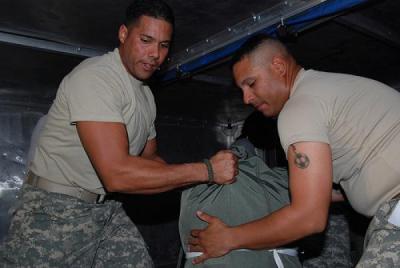
Photo: Puerto Rico National Guard troops pack it in after a year's deployment at Guantanamo; The National Guard; licensed under creative commons

Photo: Puerto Rico National Guard troops pack it in after a year's deployment at Guantanamo; creative commons http://www.flickr.com/photos/thenationalguard/3229073306/in/photostream/

President Barack Obama has signaled that the U.S. military will close Guantanamo Bay detention camp within one year.  The prison has become a divisive symbol of the controversial handling of enemy combatants by the Bush administration’s War on Terror. 

President Obama has shifted responsibility for the remaining 245 Gitmo prisoners from the Defense Department to the Justice Department.  Newly appointed Attorney General for the United States, Eric Holder, Jr., will take responsibility for determining whether those prisoners will be given civil or military trials, transferred to foreign countries or released.

The outlines of the President’s new policy on detention will be filled in in coming months, but certain things are clear.

The President has forbidden the use of torture against detainees in American custody.  “The United States will not torture,” the President stated.  

This policy includes prisoners under CIA control, and while extraordinary renditions will be allowed to continue during the Obama administration review of policy, the CIA will not be allowed to transfer prisoners to any country where they will be subject to torture.  

Outgoing CIA chief Michael Hayden sent a message to staff at the agency stating that the new policy would be carried out, “without exception, carve-out or loophole.”

Holder’s justice department has begun review of enemy combatant court cases beyond Guantanamo Bay, such as that of Ali Al-Marri, held at a military brig in North Carolina.  Al-Marri has appealed to the United States Supreme Court for review of the Defense Department’s decision to imprison him without trial.  Al-Marri was living in the United States as a legal resident at the time of his arrest, giving him a stronger position to seek a trial than, say, an enemy combatant captured by coalition forces in Afghanistan.

However, the Obama administration sought a postponement of hearing by the Supreme Court.  Al-Marri “is clearly a dangerous individual,” Obama has said. “We have asked for a delay in going before the Supreme Court to properly review the evidence against him.”  

The Bush administration had also decided to close the Guantanamo Bay facility, but ran into difficulty finding new places to house the remaining detainees.  Bush policy was to hold enemy combatants without trial or transfer them to foreign countries for incarceration.

However, the U. S. Supreme Court has ruled that all Guantanamo detainees are entitled to habeas corpus, or, the right to petition a federal court for review of the decision to imprison them.

Recently, a federal court in Washington D.C. ordered five Algerian detainees to be released for lack of sufficient evidence against them.  Other detainees have been caught in legal limbo because the United States would like to release them to their native China, but are constrained by the probability that they will be subject to ill treatment or execution if returned, because of their opposition to the Chinese regime.

The Obama administration will also deal with the question of detainees held in U.S. military custody abroad, such as those held at the Bagram base in Afghanistan.

These prisoners were captured in military operations and are thus more like traditional enemy combatants, but some have been held for as long as eight years and there is still no end in sight for conflict in Afghanistan.

From a policy perspective, Obama’s intent to increase U.S. troops and coalition commitments in Afghanistan soon, will likely result in more enemy combatant prisoners, going forward.

Hillary Clinton Threads a Needle

Originally published on February 24, 2009 at http://www.care2.com


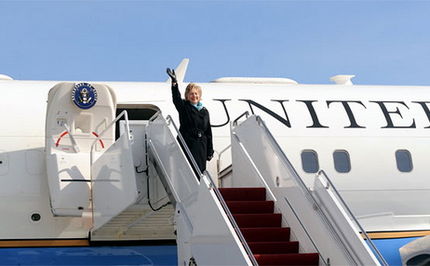
Hillary Clinton met with diplomatic officials and heads of state in China, Korea, Japan and Indonesia and did not hesitate to jump into a wide range of key issues on her first official trip as Secretary of State.  Ms. Clinton prioritized her discussions around North Korean nuclear disarmament, the world financial crisis and laying groundwork for cooperation on climate change.  Clinton did not push the issue of human rights in meetings with Chinese leaders, emphasizing the growing importance given to cooperation on economic and environmental issues.     The most immediate challenge was to establish the Obama administration’s position on North Korean nuclear disarmament by encouraging U.S. allies to reinvest in firm bilateral negotiations and by signaling to the North Korean government that cooperation will bring rewards.
North Korean leader Kim Jong Il has pressed back hard against efforts by both the administrations of George Bush and Bill Clinton to obtain denuclearization. North Korea has claimed to need the weapons defensively, accusing South Korea and the United States of intending an attack. North Korea has also tested both nuclear weapons and long-range missiles, boasting of its power to retaliate for any attack against it.
Secretary of State Clinton’s task was to entice North Korea to participate in negotiations towards completing disarmament.  However, she clearly needed to warn the communist nation that it would suffer further isolation and harsh treatment in the region if it failed to cooperate and that the United States stood with its allies in the six party talks. “North Korea is not going to get a different relationship with the United States while insulting and refusing dialogue with the Republic of Korea. . . . The Republic of Korea’s achievement of democracy and prosperity stands in stark contrast to the tyranny and poverty in the North,” Clinton said

Negotiations have in the past also included offering the North Koreans foreign aid in exchange for their cooperation, but have never concluded a lasting agreement.  Secretary of State Clinton said before her trip that the United States is willing to normalize relations with North Korea in return for disarmament. 

This approach is consistent with the position that President Barack Obama took during the presidential campaign, stating that he would not hesitate to talk to foreign nations in an effort to reach compromise, even those whose positions the United States rejects.  However, Secretary Clinton was threading a needle in giving substantial incentive for North Korea to comply and yet speaking out on behalf of ally South Korea in unity against the North’s nuclear saber-rattling.

Nationalization: Cutting Losses and Creating Solutions

A debate rages on different plains about rescue of the banking industry and real estate market.  That is a clean way of putting it.  Not the debate–the debate is pretty clean.  But the notion that it is just the banks and homeowners who are at risk is pretty sanitary. 

Without banks there is no substantial financing of business activity.  We could reinvent financing, especially since the Internet was not around when the current banking system was begun, but it would take years to reach anything like national capacity.  In the meantime, now, falling business activity continues a downward spiral of unemployment, business failures, investment losses, and postponed planning and recovery.

With no finance and no confidence, there can be no real estate market.  There is only deterioration in values and losses in investment.  Forward business activity and healthy market forces require confidence in the future. 

Hence, the nationalization debate.

If the government takes over weak segments of the banking system, it can, at a cost, make them stable institutions of the recovery economy.  They can loan money without fear of failing for lack of sufficient loan reserves.  Similarly, the government could buy up and hold real property at discounted prices throughout the United States.  This would eliminate the concern that numerous properties sit in default with no payments made on the mortgages and with no interested buyers.  The government is used to owning land in America–it owns much of what is not developed or used.  Add to that a fraction of the housing stock, to be resold later, and you have a more stable marketplace for the remaining property.  (You would have to create a formula such as automatic purchase of all homes in foreclosure at a set percentage discount for a six month period).

Why not nationalize one or both fractions of the marketplace?  Certainly this is not an efficient method of setting prices and running financial and real estate markets.  It would be a really bad idea if you had a functioning marketplace because like the communist economies, it would lead to poor allocation of resources, lack of private incentive and declining productivity.  But, should we be holding out for efficiency, when the very functioning of the system is so broken down?

It must be particularly hard for the Obama administration to look towards nationalization as an option.  The first African American president is hardly a financial liberal or political radical.  He taught at the University of Chicago, a free-market powerhouse.  He was not, so far as I know, part of the “Chicago School” of conservative economics, but neither was he ever noted as a liberal economic standout.  His centrist, free market, choices for Treasury department and economic advisors confirm this.  

What’s the solution?  How about giving a group of responsible Republicans the challenge of crafting and selling the temporary-nationalization plan?  Cherry-pick them in advance so they are willing, at least, to do what is needed.  Despite all our anti-politician rhetoric, there are many among them who are in an of themselves, profiles in courage. 

Rather than indulging in battle over whose party it is, and what it stands for, why not take on the problems of the day and solve some?  

We are clearly at a point of great uncertainty.  The recovery may come as the bottom of the market is reached according to market forces or it may not.  The stimulus spending and tax cuts may aid the recovery or they may not.  But the hole in the plan needs to be repaired, one way or another.

There is a significant, whether that’s one percent or more, risk of more devastation to business activity and investment value.  At some point, rather than aiming for a refined solution, you need to aim to protect yourself from the risk of catastrophe.  Protection from disaster is different than planning for optimal results.  We should, at least someone should, be advancing ideas on that level.

When the countries of the former Soviet Union endured its collapse and economic crisis in the 1990s, industrial production, standards of living, and life expectancy declined deeply.  Painful as it was, within a few years, conditions improved.  We might learn from these experiences as well as from other nations that have had to nationalize collapsing industries, and our own savings and loan crisis in the 1980s.  In each of these cases privatization was eventually successful, so we should not worry about a slippery slope towards socialism or the communist domino effect.  The real risk in those directions comes only if the United States is unable to pull itself up by its bootstraps and demonstrate a viable system.

Big Spender or Economic Reformer?

Originally published on March 5, 2009 at care2.com


In the midst of this economic downturn, the president has proposed a budget that gives further definition to his vision for American progress.  In some ways it may not be the best time to propose something new, as many people, shocked by financial insecurity and instability, investment and pension losses, and business and job distress feel the need to hunker down and survive, rather than experiment and take risks.

On the other hand, the government is stirred to take significant steps to repair a major crisis, and while thinking big, there is opportunity to take bold action.  That, I think, can be said of President Obama’s political vision.  The question is, what kind of action is it?

Probably the most sensitive issue at the present time, is the issue of government spending.  Americans are mistrustful of congress’ ability to spend responsibly and are deeply concerned with the deficit.  How should Obama’s grand, if evolving, plan be looked at from this perspective? 

Is he the big-spending liberal, willing to meet any “progressive” goal with tax-payer dollars, giving only secondary consideration to the harm to the economy of tax increases, redistribution of wealth, and deficit spending? 

If we turn to conservatives for an answer, we hear the harsh critique of a socialist redistribution of wealth.

Even moderates, such as David Brooks, find the size and target of the fiscal stimulus legislation and budget proposal too big and too progressive, while expressly embracing parts of the program such as education.

If we ask liberals, they may very well see an increase in public spending on education, health care, and alternative energy that bespeaks progressive values, liberal causes and Democratic agenda.

I disagree.  Mr. Obama is a financial reformer, using public funds as necessary to do what government truly needs to do, but intent on cutting waste, corruption, and mismanagement out of the workings of government?

The main thrust of the vision is still investment in parts of the economy that need repair:  a struggling education system that is needed to produce a work force on which our prosperity will be based; an inefficient health care system that uses too much of our national budget, is a drag on our businesses large and small (unless like Walmart did they force these costs on private individuals and on state tax-payers when private citizens use public resources) and is too expensive for too many to afford; and energy that is imported at great cost to our economy and national security.  These are issues of fundamental importance to our economic prosperity, our business climate, our capitalist system.

Couldn’t we call what Obama is doing long-range economic reform? 

It might even make a good Republican agenda, as they are rooting around for one. 

Let us not quarrel with the targets of public spending as they are, in fact, economically productive and necessary.  Let us not quarrel with the amount of funds because they are realistic and necessary.  Let us organize and fight for the right use of these funds so that every dollar engenders in our children the philanthropic, creative, entrepreneurial and leadership qualities of business and civic leaders like Bill Gates, Steve Jobs, Warren Buffet and Colin Powell. Let’s make sure our businesses and citizens can afford economical health care benefits, and our citizens receive worthy care, and let us, using the scientific and entrepreneurial genius among us, develop alternative energy or at least efficient energy that is home grown, as clean as is reasonably possible, and marketable to the world.

Is that liberal?  Really?

President Obama’s First 50 Days

Originally published on March 11, 2009, at http://www.care2.com


The first 50 days of the Obama Presidency have seen a flurry of major legislative activity, historic signing ceremonies, substantial policy speeches and high-stakes politics. In fact, “hit the ground running” doesn’t do it justice, as the President began giving press conferences about his economic plans — sensing the markets were collapsing into the vacuum — in the days leading up to his inauguration.

When Barack Obama was sworn in January 20, 2009, the financial crisis had already engulfed the global economy and given direction to his presidency. The celebrations of the 232 year-old democracy, of its first African American President, and of the orderly and ceremonial transition of authority were quickly consigned to history. Mr. Obama made clear that he believed the current crisis to be a historic one, and that he intended to put the considerable financial resources of the American government in play to stabilize the financial system, support the economy, and aid citizens in need.

That said, what has been astonishing, in reviewing Mr. Obama’s first 50 days, is the speed, force and size of the President’s early efforts. While an assessment should also mention stumblings on high-level appointments and near unanimous Republican opposition to the President’s legislative agenda, this pales in comparison with the scale of Mr. Obama’s accomplishments:

January 20 — In his inaugural address, Mr. Obama pressured congress to put stimulus legislation on his desk in record time.
February 17 — The resulting 787 billion dollar American Recovery and Reinvestment Act contained no congressional earmarks, per the President’s request, yet provides for more than five hundred billion dollars in government spending and hundreds of billions in tax cuts and support of state programs.
February 26 — The administration introduced an annual budget dramatically shifting federal spending priorities towards education, health and energy policies and launched health care reform with 600+ billion in funding.
By executive action the President has raised ethics, transparency, and lobbying standards, begun new policies on treatment of enemy combatants, and ended restrictions on stem cell research funding.
March 10 — As if he wanted to start of the next 50-day sprint off with a bang, the President called for sweeping changes in education.

Elements of Power

Beyond the honeymoon authority of all incoming presidents, Obama’s substantial power results from several factors; the chief among them undoubtedly is the economic crisis. Fed. Bank Chair Ben Bernanke, a scholar of The Great Depression has opined that the U.S. government’s initial failure to act was a contributing cause of the Depression’s depth and length. Bernanke and Former Treasury Secretary Henry Paulson saw in the credit freeze of late 2008 the potential that the cyclical downturn, compounded by financial collapse, could lead to a much larger protracted economic crisis without government intervention.

Persuaded by this analysis, President Obama came into office prepared to act. Mr. Obama never campaigned for shifting economic power to the public sector or achieving reform of health care in record time. But neither did he display timidity. His ambition and soaring rhetoric bespeak a desire for bold action and significant achievement.

The overwhelming congressional Democratic victory in November offered Mr. Obama a crucial legislative base. Roughly 58% of both houses of Congress are aligned with the President and a few Republican moderates have been willing to work with the Democrats, thwarting the impediment of a filibuster in the Senate.

Also increasing the President’s power is the fact that he has the Federal Reserve, Treasury and economic advisers, an unrivaled economic analysis powerhouse, close at hand on issues that are highly complex and fluid. Congress, too, has hearings and testimony by experts, and the press has access, but this is no match for the President’s daily meetings with advisors. Some Congressional and press deference is likely the result.

Conversely, this may, in part, be responsible for the nearly unanimous opposition by congressional Republicans. As the recent and much derided Republican response by Louisiana Governor Jindal revealed, Republican positions are based on conservative theory, but do not show in-depth analysis of current conditions.

Another important factor is that Mr. Obama has chosen powerful and experienced professionals for his foreign policy team. Secretaries Clinton and Gates and Diplomats Richard Holbrooke and George Mitchell bring star stature, sober experience, and appropriate diplomatic skill sets to the foreign policy agenda. Secretary Clinton has already held discussions on North Korean and Iranian nuclear disarmament, yet the President has not been called away from his efforts on the domestic agenda.

Finally, polling has given Mr. Obama approval ratings above 60%. While presidents are not beholden to pubic opinion polls, positive approval ratings do support presidential authority. Journalists get out a president’s message far more effectively when approval is up and focus more on opposition to the president when approval is down. The cumulative result is an administration engaged with experts and open to contrary advice, but with great power to advance the President’s agenda.

Bailout Protests Take a Page from History

Originally published on March 5, 2009, at politicsunlocked.com


The memory of the Boston Tea Party was revived last week as Americans in more than thirty cities gathered to protest financial and automobile bailouts, record-breaking stimulus spending, and Democratic leadership in general. Street demonstrations like this are something new, as far as the financial crisis is concerned: both the current and the former president’s actions have inspired anger and mistrust among some, but until now, that dissatisfaction had registered mainly in polls, man-on-the-street interviews, and letters to Congressional offices.

Now, though, a more visible movement appears to be underway. Beginning with calls during Januaryfor a mass-mailing of teabags to government leaders, and later with a series of small public protests around the United States in February and scheduled through at least July 4 of this year, organizersare channeling frustration and fear into protest.

The original Boston Tea Party, in 1773, was an action against British colonial authority over the American colonists. Colonists rejected British control of trade and taxes and argued that taxation without parliamentary representation was unlawful. In protest, colonists dumped a substantial quantity of highly valuable British tea into the harbor. The event angered the crown and united colonists in solidarity against perceived injustice of the crown’s authority.

Current anger over the burden of taxation and fears about the squandering of public funds have made the Tea Party an apt reference point for present-day protest organizers. A group called the Political Exploration and Awareness Committee PAC appears to have played a central role in scheduling and promoting the recent spate of tea parties. The group, whose website was initially full of laudatory references to CNBC correspondent Rick Santelli, has since clarified that Santelli has nothing to do with the site or movement, though their sentiments seem to be aligned. (Santelli was lately made famous for his February 19th on-air tirade about the bailout plan, in which he exhorted a Chicago trading floor, “How many of you people want to pay for your neighbor’s mortgage that has an extra bathroom and can’t pay their bills? Raise their hand.”)

The tea mail-in campaign hasn’t netted extensive news coverage, but a number of the recent protests have gotten write-ups — particularly the larger gatherings, like the crowd of about three hundred that congregated in Atlanta last Friday. Several journalists and bloggers have called into question the grassroots authenticity of the protests, alleging that they may have been financed, organized, and publicized, to an unknowable extent, by professional conservative advocacy groups or corporate interests with ties to same.

There is another tea-bag mailing scheduled for April 1.

Ponzi Scheme or Free Market?

Originally published on March 3, 2009, at politicsunlocked.com

A pyramid scheme or “Ponzi scheme” (named after legendary swindler Charles Ponzi) is the name given to a bit of financial trickery in which early investors are rewarded with big returns from money put in by later investors. The promise of big returns lures more and more people to keep adding to the pot, until the public is spooked, the market for funds tapped, or the game shut down by authorities. At that point, the later contributors, who greatly outnumber the early participants thanks to publicity and word of mouth (hence “pyramid”), are left empty-handed, as the funds have already been paid out to the first investors who generated buzz and paid off the scheme’s instigators.

Stock market

Compare this with the stock market, where investors bid against other investors for shares in companies. The more people are willing to pay for shares of a company, the higher the price, according to supply and demand. The company uses the investment funds as capital to finance their operations, and successful businesses reward stockholders with dividends, higher share prices, or simply confidence that the business will grow and the stock will increase in value. In a successful business, even if shareholders abandon the stock, one could retain shares — albeit with little value — until a later time where the stock might again come into favor.

Real estate

Real estate is similar in that people purchase land at a price based on supply and demand. The price goes up if many people want to buy and are willing to pay more in order to have what’s being sold. Price goes down when there is less demand, but if you own the land, you really own it and it has some value as a home or as land to be developed.

Added leverage

Unfortunately, it’s not that simple. In recent years, stock prices have gone up so fast, and real estate values have increased so much, that many people wanted to invest even after they had no more money to invest. But interest rates were lower than the profit they believed they could make, so they borrowed money and invested it in stock and real estate. This is called leveraging, and it’s perfectly legal: borrow money, buy stock or real estate, sell stock or real estate, pay back interest, keep the profit.

An individual who had ten thousand dollars to invest might borrow another ten or twenty or hundred thousand and invest the total. If they doubled their money in a year, they would have sixty thousand dollars, minus the thousand they had to pay in interest to borrow the funds for one year. Institutions did this with millions of dollars; one million to invest might be added to ten million or thirty million borrowed.

Then something happened. Was it the price of oil sucking the profits out of companies large and small? Was the limit of leverage as everyone willing to borrow heavily to invest had already done so and there were no more people lining up to play the game? Was it fear of the growing deficit (2006), the flailing war effort in Iraq (2007), or the pending presidential election exacerbating tension and uncertainty (2008)? Risks went up and the expectation of reward fell. The real estate market slowed; the stock market topped.

People began to sell, to take their profits.

Prices started to fall, and economic clouds darkened. People who borrowed money to invest were still paying interest. They had to make the calculation. Was the fast run-up in prices going to continue? Would a gradual gain in prices outpace the cost of the funds that they borrowed? Was it worth the risk? The answer was likely “no.”

“Deleveraging”

As prices fell, the stock and real estate prices fell below the purchase price for many investors. Now they were taking a loss on their borrowed funds. Paying back the bank became more difficult. Banks started to find that the risk of default was going up.

Ponzi scheme or free market? The bank’s fault or the investors? Where is all this going?

These days, financial experts are looking for the bottom. At what point is the speculation gone, the deleveraging complete, and the more authentic supply and demand for productive use of land and capital remaining?