Category Archives: Reflections

Recruiting Ex-Presidents

By Marc Seltzer; originally published on July 13, 2009, at politicsunlocked.com

(Written prior to the earthquake of 2010, but relevant)

It’s an odd life for American heads of state. After learning and practicing the lessons of leadership at the highest level and serving their country for, at most, eight years, they are termed-out and must retire to fundraising, public speaking, and unofficial political influence. Is leadership really in such great supply that there are no official duties for the likes of Bill Clinton and George W. Bush?

In our hemisphere, no less

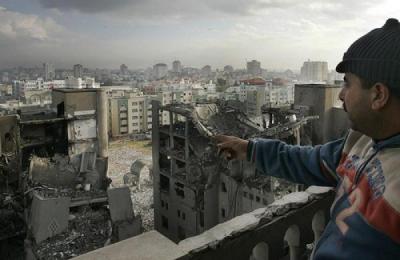
Take a look at Haiti, a nation whose corrupt, unstable institutions have hampered its development as much as frequent natural disasters and the desperate poverty of its citizens. Haiti is the recipient of American foreign aid, diplomatic missions, and numerous visits by well-meaning politicians — everyone from Clinton to Jimmy Carter. Yet poverty, unemployment, corruption, and lack of infrastructure remain facts of daily life for huge segments of the Haitian populace. What Haiti really needs is good leadership in the form of a powerful world leader.

Bill Clinton, stopping by Port-au-Prince on a recent charitable visit, noted that his 1994 restoration of Jean-Bertrand Aristide, the twice-deposed former president of Haiti, was the beginning of something good. Why not follow through and give the Greater Antilles nation the leadership it so sorely needs? If Bill Clinton became the chief executive of Haiti, for example, his leadership could set the country on a path to recovery that René Préval, the divisive current president, may not be able to realize. Simply by virtue of who he is, Clinton enjoys a higher level of worldwide political capital than Préval, and would probably be able to command the attention of other world leaders in a way that Préval can’t.

What at first seems impossible should not. Haiti is not a rival; its goals are not likely to conflict with American policy. But just to be sure that he is not put in a position with a national conflict of interest, Bill Clinton would not have responsibility for foreign policy among his duties — hence the “chief executive” title. His service to Haiti, far from somehow compromising his loyalty to the United States, would benefit both nations, as a troubled state would gain a measure of stability and prosperity, adding security in the hemisphere and the world’s political goodwill would be reflected back upon Clinton and the U.S.

And just across the border

Mexico, meanwhile, is currently struggling with drug enforcement. President Filipe Calderon has stepped up enforcement efforts and the violence in border cities such as Juarez has skyrocketed.  The violent turf battles have been especially difficult to stop in part because of bribery and corruption within public institutions, from the police up to the courts.

Mexico’s drug and violence problems will probably require more government intervention, not less: more organization, more control, and more authority for law enforcement. This is an area in which former president Bush has more than suitable experience. President Bush oversaw the buildup of the largest intelligence and security network in history. While his programs were highly controversial in the United States for the way they prioritized intelligence and security issues over civil liberties, it may be what Mexico needs in order to successfully fight its internal drug war. Bush could be the Mexican drug czar and help that government assert greater authority in the fight against bloodshed and drug trafficking.

Bush concentrated power in the executive branch and conducted national security initiatives in secret.   While this approach nearly caused a Constitutional crisis in the United States, Bush would work at the discretion of the Mexican President Calderon.  The Mexicans would have to make their own decision about the proper balance of civil liberties and law enforcement.  In Mexico, it has not been easy to find politicians to oversee the enforcement of drug laws who are not themselves tainted by connections with the cartels.

Would developing nations ever want a former American head of state to take command? Not likely, given the current global climate of suspicion and uncertainty. It’s true that in a certain light, the idea bears a resemblance to the colonial practices of an earlier era. But that’s the wrong way to think about it. What is being proposed here, is more about leadership. A politician’s strengths need not pass into obsolescence after a certain number of years, not if international political leadership became a professionalized industry. The demand for experienced leaders is unquestionable; what’s needed now is the supply. The route is uncertain and new rules will surely have to be devised, but this is still an experiment worth making.

Recession Rant

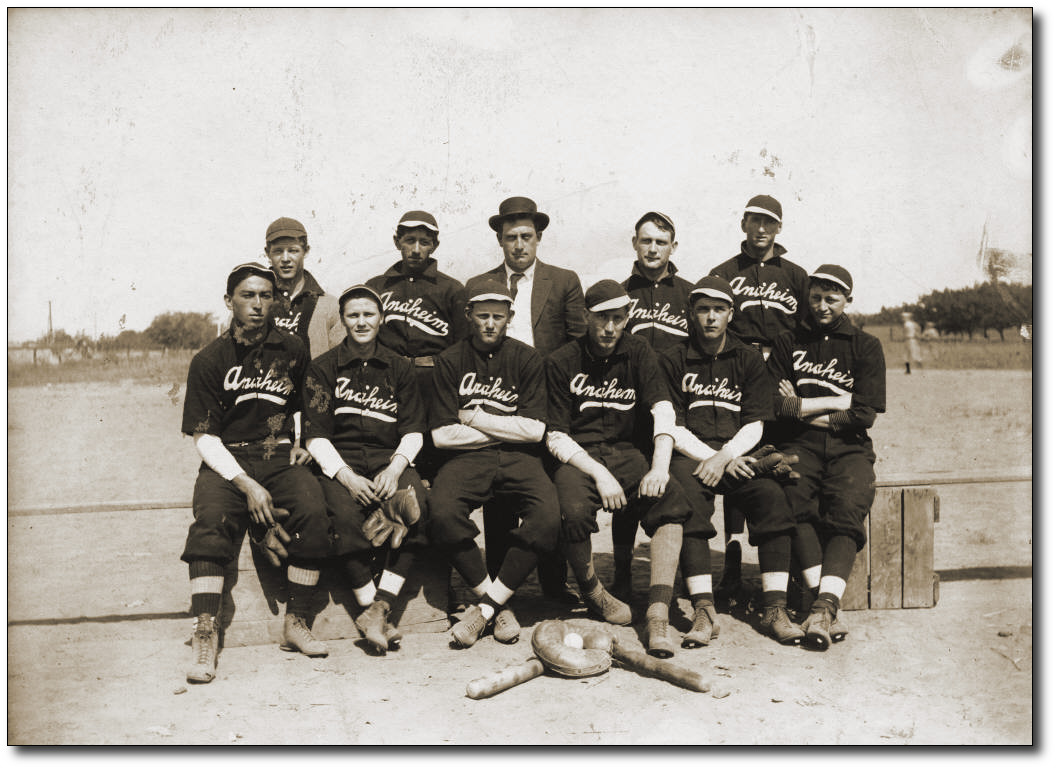
Photo: caveman92223; licensed creative commons

By Marc Seltzer; originally published July 12, 2009, at politicsunlocked.com

. .

As I watch news coverage of the ongoing economic crisis and responsive stimulus legislation, I am constantly reminded of Abbott and Costello’s “Who’s on First” routine, where the comics discuss names of their team’s baseball players:

Abbott:  Well, let’s see, we have on the bags, Who’s on first, What’s on second, I Don’t Know is on third…

Costello: That’s what I want to find out.

Abbott: I say Who’s on first, What’s on second, I Don’t Know’s on third.

Costello: Are you the manager?

Abbott: Yes.

Costello: You gonna be the coach too?

Abbott: Yes.

Costello: And you don’t know the fellows’ names?

Abbott: Well I should.

In October 2008, when the sky was falling, and several of the biggest entities in the financial system collapsed, economists and journalists couldn’t bring themselves to say the “R” word.

We were deep in a Recession, as it turned out.  This recession started nearly a full year earlier, in December 2007.  But the National Bureau of Economic Research(NBER), which makes the call based on economic statistics over a period of months, allowed us to endure the near collapse of the financial system without an official proclamation.

Costello: Well then who’s on first?

Abbott: Yes.

Costello: I mean the fellow’s name.

Abbott: Who.

Costello: The guy on first.

Abbott: Who.

Costello: The first baseman.

Abbott: Who.

While economists and journalists did focus on the credit crisis, conveying the dire nature of what they were seeing, and making suggestions that we might be heading toward the unthinkable – a Great Depression Sequel – we still couldn’t use the word Recession.

Then, in December (after it was announced we had been in a recession all along), the press sought to make up for lost time.  Missing out on a full year’s worth of recession talk, they cut loose with a flurry of descriptors:  a deep recession, prolonged recession, economic crisis, catastrophe, financial disaster and what may turn out to be true, the worst downturn since the Great Depression.

Costello: The guy playing…

Abbott: Who is on first!

Costello: I’m asking YOU who’s on first

Abbott: That’s the man’s name.

Costello: That’s who’s name?

Abbott: Yes.

Costello: Well go ahead and tell me.

Abbott: That’s it.

Costello: That’s who?

Abbott: Yes.

750 banks fell within months of the 1929 stock market crash which began The Great Depression.  As many as 9,000 banks continued to fail during the 1930’s.  FDIC Insurance was nonexistent, so people simply lost their money when their bank ran out of funds.

13 banks have failed so far in 2009.  Another 25 failed in 2008.

The contemporary government response has been swift, if not altogether logical.  

Deposits up to $250,000 are now guaranteed by the federal government.  Under the TARP bailout program, banks may be given funds to keep them solvent and lending.  There is a fair amount of confusion over the purpose of the program and whether healthy banks or failing ones are actually seeing the government support.  Some initial money went to Citigroup, a behemoth multi-national organization considered “too big to fail” following the events in October of 2008, when investment bank Bear Sterns failed and cracked the confidence of the entire financial system.

Costello: Look, you gotta first baseman?

Abbott: Certainly.

Costello: Who’s playing first?

Abbott: That’s right.

Costello: When you pay off the first baseman every month, who gets the money?

Abbott: Every dollar of it.

The initial $700 billion bailout was passed in November of last year and was renamed a recovery package in December.  That was soon followed by a $789 billion stimulus bill.  And as furious as we all are at the cost of this crisis, be ready for toxic asset and real estate stabilization plans which will likely total even more than these first two.

Only $500 billion of the stimulus bill is true government spending.  The rest is tax relief or, in the case of the bailouts, investments in companies that should, in theory (it worked before in Sweden), allow the government to recoup the invested money in a few years.

Costello: All I’m trying to find out is the fellow’s name on first base.

Abbott: Who.

Costello: The guy that gets…

Abbott: That’s it.

Costello: Who gets the money…

Abbott: He does, every dollar. Sometimes his wife comes down and collects it.

Costello: Whose wife?

Abbott: Yes.

The original stimulus bill was designed to create 2-4 million new jobs.  Then, as the economy began losing a 500,000 jobs a month, the language changed to “save or create” 3-4 million jobs.

Politicians and pundits who say the stimulus bill will turn the economy around may overstate the case.  So too, those who doubt it will save or create a single job.

A more reasonable assessment is that it will soften the blow and make a long-lasting recession more tolerable.

What We Wont Learn from the Sotomayor Confirmation Hearings

By Marc Seltzer; originally published on July 11, 2009, at politicsunlocked.com

. .

If there is one legal question that is profound and topical, the discussion of which would be deeply thought provoking and educational in the Supreme Court nomination hearings of Judge Sonia Sotomayor, it is the constitutional division of power between the different branches of government.

The power struggle between the branches is most notably implicated in the national debate over the Bush administration’s conduct of foreign policy and war.  President Bush and Vice-President Cheney asserted generally exclusive executive branch authority in the conduct of intelligence, detention of prisoners and avoidance of oversight in national security operations after 9/11.

Now that Bush and Cheney are out of power and more information is coming out about their conduct, opponents of such policies are on the attack, calling for investigation.  Only the most recent issue is whether Vice-President Cheney directed that the CIA withhold information from Congress that Congress has by law, demanded that the executive branch provide.  Other red-hot manifestations are whether the use of torture by the administration can be subject to explicit laws banning such activity, and whether the President was in fact required to brief congress regularly on its conduct of foreign policy and military action, as Congress has demanded.

Underlying this and other such conflicts is the question of constitutional authority in the different branches of government.  The President is the Commander-in-Chief.  Does this grant the President sole authority for decisions relating to national security, or is it an authority shared by the peoples’ representatives in Congress?

In the same vein, what are the limits of such Presidential authority?  Can the President authorize torture if he believes it is necessary for national defense?  If Congress requests that the President provide information on on-going military operations, can the President ignore the request if he believes that to follow it will harm the operations?

The ultimate answers to these questions cannot be known until the U.S. Supreme Court decides each issue in the context of specific facts presented in a lawsuit.  But a Supreme Court nominee could give us her reflections and a certain education.  This would be far more meaningful then the competing assertions of power by the administration and congress.  Of no more use are the pundits and professors who weigh in.  Almost universally, commentators take political positions based on desired outcomes, but give no real insight into what the Supreme Court would be likely to do.  The Supreme Court is deeply aware of its profound power and cautious about its legitimacy in asserting its authority over other branches of government – being the unelected branch.   Pundits have none of this real world caution.

Consequently, the Supreme Court tends to go to great lengths to avoid constitutional questions, instead deciding cases on smaller technical matters whenever possible.   There is nothing wrong with this judicial approach, except that it leaves many of us wondering where the bounds of legislative or executive power really are.

I, for one, have no doubt that they are not where the President and Congress say they are.

Tweeting the News from Iran

By Marc Seltzer; originally published June 17, 2009 at http://www.politicsunlocked.com/index.php/article/tweeting_the_news_from_iran/25911

. .

Reporting through Twitter while other outlets are banned

A literary theme familiar in the United States is that government may one day use technology to oppress its people. George Orwell’s novel Nineteen Eighty-Four planted the seed of awareness in the Western mind, and as radars have come to watch our speed on the road, cameras look for criminal behavior indoors and satellites listen to our telephone calls, we have become concerned about the growing power of “Big Brother.”

Could Orwell have imagined that the tables may be turned on oppressive governments in the 21st century? Following the June election in Iran, the Islamic Republic is turning off the technology in hopes of restricting communications among its stirring populace. Journalists are restricted from covering protests. Major news organizations are unable to penetrate the events with video cameras and microphones.

However, regular Iranians are reporting from the streets by Twitter. A social networking site popular among celebrities, Twitter conveys short messages, including images and websites by Internet URL link from a cell phone, handheld digital device or computer. Followers around the world receive updates from the homes, offices and streets of Tehran.

To get a sense of what can and cannot be conveyed in the 140 characters that each “Tweet” is limited, to I have copied a recent series of communications (each of the following paragraph blurbs were originally separate “Tweets”):

  • it is now dawn in tehran – streets are quiet – we must move from here – this was good internet connection but not ours – #Iranelection
  • last night thousands stayed in streets between Parkway and Vanak sq until after 2am – #Iranelection
  • unconfirmed – several Generals have been arested – #Iranelection
  • unconfirmed – military has refused orders to shoot protesters – #Iranelection
  • Kamenei is under pressure and fighting for survival – without ANejad his authority is finished – #Iranelection
  • large demo today outside tehran tv-radio headquerters – Karroubi attended – #Iranelection
  • support for Mousavi in Tabriz is v-high – many protests – #Iranelection

While Twitter is not a major news outlet with live reporting and video, it is still contemporaneous to the events reported. There are questions of credibility as a consequence, such as who is really Tweeting, which we cannot always know. In fact, some Twitter communications have warned that the Iranian Government is setting up fake Twitter sites, spreading false information to protesters.

On the other hand, Twitter has been used to guide hundreds of thousands of protesters to rallies and redirect them quickly and efficiently when locations or times are changed. Reports on the arrest of leaders, the number of participants at government and opposition rallies, and action or lack of action by the police and military are also reported.

A few of the hot Twitter sources are: “Persiankiwi”, “Irannewsnow”, and “StopAhmadi”. The U.S. State Department reportedly asked the executives at Twitter, located in California, to forego a scheduled maintenance shut down in order to keep the Tweets coming during the Iranian crisis. Traditional print and broadcast reporters have been told that they cannot report on events in Iran without permission of the government, and that permission is not being given freely. As events unfold, you may be able to piece together facts on the ground in Iran using updates from Twitter sources.

While the outcome of the election conflict in Iran remains to be seen, at this point, the public is using technology to further democratic ends. Where there is no free press, information still flows from person to person through the Internet. Where the government tries to restrict public assembly, instant communication helps people organize and connect in protest beyond the reach of the government. And, where the government tries to control the story, the truth gets out. George Orwell, who wrote during the consolidation of Soviet authoritarianism, might be surprised. He would certainly be pleased.

Stimulus: Feel Good Spending v. Investment in the Future

1037301_431

By Marc Seltzer; Originally published on February 5, 2009, at care2.com

. .

There is no question that Barack Obama’s plan for creating jobs will ease the pain of this economic downturn.  However, in the long term, not all jobs are equal.

There are examples from the past of public spending programs that employed many Americans and paid off handsomely.  Constructing the interstate highways cost 114 billion dollars (adjusted for inflation, upwards of 425 billion) and employed hundreds of thousands over 30-plus years.  The result facilitated interstate commerce greatly, contributing to American’s industrial and commercial success and prosperity.

John F. Kennedy’s Mission to the Moon likewise employed hundreds of thousands in the effort to send a man to the moon during the 1960s.  The payoff was in leadership in science and engineering and advances in aerospace and communications technology, which have transformed our economy and way of life.

It is against these examples that our current spending proposals in congress should be measured.  Building and repairing roads today will no longer transform the industrial or productive capacity of tomorrow.  Even repairing bridges, some badly in need, though valuable, will not multiply the economic gains through new industrial and commercial success.  Roads and bridges are important, but they should simply be included in existing infrastructure plans to be paid for where they bring value within government budgets.

What does measure up?

The types of public spending that could bring jobs now and prosperity in the future are those that successfully address current economic problems.  For example, nationally, we spend far too much money on health care for the services that we receive.  We could put doctor and insurance records on line in a step towards better managing our system and we can spend more now on research and development from pharmaceuticals and cancer to genes and stem cells with an aim to achieve cost-effective health benefits.

Similarly, in urban centers we spend too much time commuting in traffic, lowering our productivity.  Investment in substantial urban public transportation, such as a comprehensive Los Angeles Metro system and smarter choices nationwide, could make a real difference in long-term productivity and savings in pollution and energy costs.

We also need clean energy that is competitive with oil, which has been economically efficient but environmentally costly.  This might take 10, 25 or even 50 years to develop.  But the investment would pay off in securing new affordable energy that was less environmentally harmful and creating a new commodity that we make and trade rather than import to our detriment.

Most importantly, our education is failing to produce a new generation that can lead the world in science, technology, research and all the other fields of importance to our continuing leadership and prosperity. Our commitment to education can’t fluctuate with the cycles of the economy unless we accept that our leadership in the 21st century will waiver.

Investment in any of these fields, that are designed to enhance productivity and profitability of public and private activity, will increase value.  In many ways the other spending included in the stimulus bill is just a temporary fix with long-term negative budget-deficit consequences.

In this light, both Democrats and Republicans have it wrong.  Spending on anything but investments in the future is wasteful–tax cuts ease the pain, but do nothing extraordinary for the future health of the nation.

We can certainly provide unemployment insurance as a safety net for the many who are suffering, but the stimulus bill must aim for productivity and prosperity in the future economy or else it robs us of our precious resources without laying the foundation for sustainable improvement.

Senate Membership Roller Coaster


The Magic Number for Cloture Ending Senate Filibusters

The Magic Number for Cloture Ending Senate Filibusters

By Marc Seltzer; originally published on February 3, 2009, at care2.com

. .

On the way to sixty — the twists and turns on the way to the Senate.

Leading up to the Presidential election in November 2008, Senate watchers were wondering how close the Democrats would get to the magic number of 60. It takes sixty Senators, under cloture rules, to cut off debate, and proceed to a vote, even where a simple majority of Senators favor passage. There have been arguments over the validity of the filibuster rule itself (essentially a minority party bargaining chip), but it has withstood challenge in the Senate for more than a century. With no filibuster rule in the House and significant Democratic majority expected, the Senate numbers represented the only Republican check on free reigning democratic legislative authority until the 2010 congressional elections.

And so, as the Democrats went into the election with assurances of picking up seats under the sway of Obama’s popularity, Bush’s dismal ratings, looming economic meltdown, and 23 Republican incumbents facing re-election, all eyes were on the numbers.

Essentially, the Democrats needed 9 to reach sixty (two Senate independents side generally with the 49 Democrats). And they got six. Six, that is, on November 4. But that left Alaska, where the longest serving Republican, Ted Stevens, ahead in the count, had been indicted on corruption charges and was being asked by his own party to resign. And Republican Norm Coleman of Minnesota, who only ended up ahead by 230 votes, triggering an automatic recount and analysis that the types of voting machines and propensity for errors, which are corrected by the recount, gave the Democrat Al Franken real hope.

The other Senate changes, first and foremost, Barack Obama’s Illinois Senate seat, and Joe Biden’s Delaware seat, would not change the Senate make-up because Democratic governors of Illinois and Delaware would appoint Democratic replacements. (Though no one could have predicted that Illinois Governor Rod Blagojevich would be caught on tape seemingly trying to exchange the appointment for the greatest personal gain, would be indicted, impeached, and removed from office, soon after the seat was filled).

Further change in the post-election Senate make-up came from the appointment of Hillary Rodham Clinton, replaced finally by Democratic State Senator Kirsten Gillibrand.

Meanwhile, on November 18, the final count in the close Alaska election reversed Ted Steven’s early lead and put Anchorage Mayor, Mark Begich, in the Senate as Democrat 58.

After further wrangling about erroneously uncounted absentee ballots in Minnesota, ballot challenges and final recount tallies were in, the Minnesota Canvassing board declared comedian Al Franken the victor over Norm (not laughing) Coleman. Republican Coleman has challenged the final tally of 225 votes in Franken’s favor, but Democrat Franken is on his way to being Senate Democrat number 59.

And so it would have remained, except that President Barack Obama’s Commerce Secretary nominee, Gov. Bill Richardson of New Mexico, withdrew from consideration in the face of an investigation, and Republican Senator Judd Gregg of New Hampshire will be nominated instead.

The political dynamic is momentous. On the one hand, Sen. Gregg serves in a state with a Democratic Governor, John Lynch, who would ordinarily choose a Democratic replacement. This would represent the magic 60 in the Senate. Republicans have said that Gregg should not take the position in this situation.

On the other hand, the Commerce position is an important one and one which a Republican advocating free market principles will find especially significant during the economic downturn. There is already talk of protectionism creeping into stimulus legislation and the Commerce Secretary would likely take the lead in advocating against protectionism at home and abroad.

And so, like the best of roller coasters, with unanticipated twists and turns, we have to wait for one more appointment to finally determine the make-up of the 2009 Senate. New Hampshire Governor Lynch is indicating that his appointment will not change the Senate’s party politics.”I will name a replacement who will put the people of New Hampshire first and represent New Hampshire effectively in the U.S. Senate.”

To some extent the numbers will be of symbolic significance since the most moderate of the Republican Senators, such as Maine Republicans Olympia Snowe and Susan Collins are not likely to join a filibuster against the President except in exceptional circumstances. But with talk of bank nationalizations, deficit-fed stimulus and promises of dramatic change in Washington, these are exceptional circumstances.

Obama Faces an Auspicious Beginning

By Marc Seltzer; originally published on January 19, 2009, at politicsunlocked.com

. .

Four Faces on the Wall

While I was visiting with friends over the holidays – and being treated to delicious homemade tamales – the conversation eventually turned to President-elect Barack Obama.  My friend’s entire family was very excited about Obama, especially since one member of this Mexican-American household had recently taken a position in Washington D.C., working in the Congressional Office of Representative Linda Sanchez.  Soon, one of the children appeared, proudly showing an autographed picture of Mr. Obama.

My friend explained that each generation of the family had placed a portrait on the wall.

Older Mexican Americans, she continued, traditionally have a picture of the PopeCatholicism is the majority religion in Mexico and much of Latin America, and the Mexican-American community maintains their Catholic identity in the United States.  In fact, the immigrant communities in the U.S. have continued to embrace Catholicism, while many in the general population have lessened their bonds with Church traditions.

The second picture was of President John F. Kennedy.  For those old enough to have experienced the election of the first Catholic President of the United States, Kennedy represents the elevation of the Catholic minority in the United States to the mainstream.  Kennedy was also a charismatic orator remembered for inspiring calls to service, guiding the United States though the risk of nuclear confrontation with the Soviet Union during the Cuban Missile Crisis and for proposing to send a man to the moon within ten years.

The somewhat younger generation had placed a portrait of former President Ronald Reagan.  It was during Reagan’s second term that immigration reform legislation allowed millions of immigrants living in the United States illegally to file for legal status and, eventually, citizenship.

The “Amnesty” program, as it was called, offered millions of Mexican Americans, and other undocumented residents living in the United States for at least five years, improved legal and social status and economic opportunity.  Many of the political achievements of the Latino communities in the United States date from this period, as those who had remained politically quiet, gained a voice and seat at the table in American politics.  Reagan’s passionate belief in a “new dawn” of individual opportunity resonated with our new citizens as it did with Americans on Main Street.

These esteemed figures present very different worldviews, but they are all deeply revered by their followers.

The fourth picture on the wall was none other than Barack Obama.

But is it a surprise that Barack Obama is so honored, even before taking office?  Like the other three, the President-elect moved audiences worldwide with his charisma and eloquence, addressing our common problems with faith and vision.

To many, Obama’s election represented, in itself, the rise of the underdog, despite challenges, to the heights of possibility.  Seeing themselves in Obama, children of the world are looking at what this man accomplished and seeing that any individual can strive to greatness.

Obama, Choose Your Battles

Photo credit: Amir Farshad Ebrahimi; license http://creativecommons.org/licenses/by/2.0/deed.en

By Marc Seltzer; originally published on January 9, 2009, at politicsunlocked.com

. .

Obama is undoubtedly feeling the pressure, felt jointly in capitals around the world, to help end the conflict in Gaza, where a fierce Israeli military operation, has resulted in significant death and destruction.

The U.S. has traditionally played a major role in facilitating negotiations throughout Israeli-Palestinian conflicts.  The deeply divisive and longstanding battle goes to the heart of the security and future of the state of Israel and rights to statehood and autonomous homeland for the Palestinian people.

However, despite the best intentions, the conflict in Gaza will not be solved easily.  At this point, President Obama’s involvement risks squandering substantial energy and political momentum desperately needed for domestic reforms.

A lesson from history

Republicans will remember:  The first significant act in office for President William Jefferson Clinton was to revisit the military ban on service by gay soldiers.

It was January 1992, and Clinton took on his own Joint Chiefs to establish a new compromise policy, commonly known as don’t ask, don’t tell.  Merits of the reform aside (which allowed many soldiers serving honorably to continue service) it angered the political right, which took sights on the Clinton Presidency and never looked back.

In retrospect, the action cost the Clinton Presidency dearly.  Despite significant improvements in welfare reform, balanced budgets and economic prosperity during his presidency, the Clinton Presidency never ceased to arouse conservative ire.  The animosity from the right dogged the President in office, played a role in Al Gore’s unsuccessful Presidential bid, and may have lingered into the campaign of Hillary Clinton, eight years later.

All this comes as a warning to President-elect Barack Obama:  Choose your first battles carefully.

Global perspectives

Obama would do well to remember that the U.S. is involved in other conflicts throughout the world, some demanding presidential attention. India, Pakistan, and Afghanistan, for example, have a joint population of 1.3 billion people, with robust nuclear arsenals in the first two and an ongoing U.S. military operation in the third.  All have recently been unwilling hosts to tragic terrorist violence directed against civilians.

While sympathetic in their distress, the civilian population of Gaza remains less than 500,000 people. Israel, and the greater Palestinian population number less than 8 million.

Barack Obama has spoken solemnly about his commitment to the faltering U.S. economy, the foundation of this nation’s prosperity and security.  His steady hand convinced voters that he was best candidate to keep a nasty recession from turning into something historic and much worse.  Americans will be looking to President Obama for leadership.

At least at the outset, Obama must avoid any temptation to solve all the world’s problems.  Being drawn into negotiating a cease-fire in Gaza risks squandering the new administration’s goodwill and focus.

Barack Obama’s Political Philosophy

Photo by Aaron Muszalski; licensed http://creativecommons.org/licenses/by/2.0/

By Marc Seltzer; originally published on December 15, 2008, at politicsunlocked.com

. .

A new political party has appeared on the American scene. It is the Pragmatic Party and Barack Obama is its leader. The platform is so new and disconcerting that many have not yet wrapped their minds around the implications.

What his critics fail to understand is that Obama is not just about be-nice politics.  He’s about practical solutions rather than simplistic party ideologies.

After two years in the national spotlight as a transformational candidate – captivating audiences, filling stadiums and talking straight about his priorities (the middle class, economics, health care, education) people are still asking if he has been clear and upfront with his politics.

One month into the transition, carrying references to Lincoln, FDR and Ronald Reagan, people are showing surprise with his cabinet picks.  In despair, some suspect a closet conservative, while others are hoping for a liberal double agent.

Some Republicans are calling him a socialist, while Fred Barns in the Weekly Standard observes “he’s pragmatic so far in one direction, rightward – who knew?”

The public went along with the old-style reporting it seems. 68 percent of Americans polled expected Mr. Obama to be liberal. They have their reasons. Mr. Obama ran as a Democrat, after all. In our essentially two-party system, if Obama had run on a new third-party platform, he might have received 4 or 5 percent of the vote, or because he sounds remarkably intelligent, 12 percent tops. Obama ran instead as a Democrat, a pragmatic choice it seems, since he won 53 percent.

It’s also true that minority candidates are often champions of more progressive political parties and organizations, which traditionally labored to advance rights and protections for disenfranchised groups. True, but Colin Powell and Condoliza Rice, not to mention Clarence Thomas, were all Republican administration appointments.

Jessie Jackson ran for President in 1984 and 1988 on a rainbow coalition for a new kind of inclusiveness. He may have paved the way in part for the Obama presidential bid, but in sharp contrast, Barack Obama, ran on behalf of the middle class.

On the other hand, the University of Chicago, where Obama taught Constitutional Law, is a center of free-market economics.  Note too, that Obama’s selections for his cabinet and crew in economics and foreign affairs are centrists.  Centrists can adopt policies from, and forge policies which appeal to, both sides of the political spectrum, without being called traitors.

There is still no approved vocabulary for describing pragmatism in politics.  What’s that Berkeley’s Professor Lakoff said, until there’s a metaphor, there’s no word and no thought?

It’s about time that someone described this new party to the pundits so that they can start using its lingo in their coverage. Not that the President Elect has been hiding anything. He has said on more than one occasion, that he is looking for “what works,” or, when things look really bad, “whatever works.”  Let’s start describing policy, not for its political effect, but its accomplishment on the merits.  The words “results oriented” and “consequences” come to mind.

“Pragmatic,” in this context, is the opposite of ideological. Democrats and Republicans aren’t always ideological, but often are, with important consequences.  The mantra “Government regulation is a drag on the economy” rings a bell.  The notion of raising taxes to balance the budget during a recession is not quite ideology, but it is cured by pragmatism, none-the-less.  Pragmatism works against ideology and lunacy, it seems — an added benefit.

What should we expect from the Pragmatic party? It’s hard to say, but we should expect an Obama administration to look to the facts and circumstances of the problems we face, rather than applying ready-made doctrines from yesteryear. Obama doesn’t seem to care whether a policy is liberal or conservative; he seems to believe it is more important to talk about whether it will accomplish its goals. It turns out that many of the liberal v. conservative debates have already been, well, decided.

Take, for example, raising taxes.  This is done to balance budgets, but also to fund entitlements and spending programs.  Obama’s appointment to head the Economic Council of Advisors, Christina Romer, recently published a serious historical analysis showing that tax hikes measurably retard economic growth.  A pragmatist will have to weigh how much the revenue is needed in the short term against the eventual harm to the economy and resulting loss of revenue over the long term.  Not very exciting in a televised debate, but logical, maybe even “good government.”

Better let the economists calculate the optimal results, rather than have politicians debate raising taxes vs. lowering taxes, without really knowing what they are talking about. Politicians with ideology don’t actually have to know what they are talking about, but pragmatists do for they are only as good as the results obtained by solutions they propose.