Category Archives: Uncategorized

“My Take” — Marc Seltzer on understanding politics

“My Take” podcast, March 12, 2010 (Click to hear)

Today’s topic is health care reform.  I discuss a few good articles (below) and a few bad misconceptions about current reform efforts.

Krugman “Health Reform Myths” in the New York Times

LA Times Cost Control the Key

Is Obama Winning? by Robert Shrum in The Week.

Disgraceful for Dems to Sabotage Health Bill.  This is the Real Clear Politics title, but its better than the original, “A Disgrace for the Democrats.” By Michael Tomasky.

Earmark Reform.   New York Times

Continuing the conversation:

Redefining America:  Constitution and Leadership 2010

Podcast:  March 26, 2010

This week the rhetoric heats up:  threats, suggestive language and scattered acts of violence.  Can the Republican Party hold it together in the face of defeat?  Attorneys and Care2.com bloggers Marc Seltzer and Jessica Pieklo discuss the politics of intimidation.

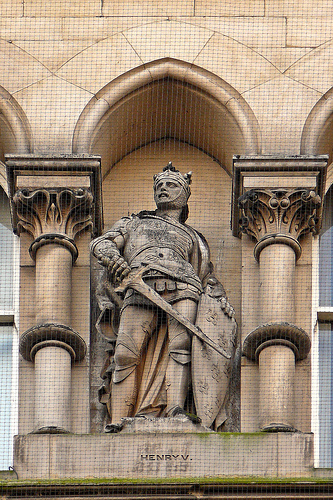
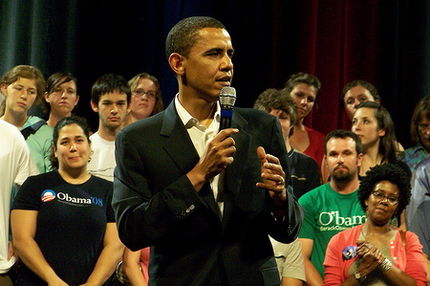
President Obama Speaks to His House, King Harry to his Men

By Marc Seltzer; originally published on March 21, 2010, at care2.com

. .

The President gave a great speech to the Democratic Representatives (excerpts below) on the day before the health care vote in that body.  It reminded me of the glorious speech in Shakespeare’s Henry V made by King Harry to his men the day before battle.  I know it sounds like I am gushing Obama here, but I have taught Henry V to high school students for many years and I know this speech too well not to think of it.  It is one of the great speeches of all time.

Shakespeare’s language can be difficult, but what comes through is the greater pride in fighting a tough battle than an easy one.  Facing battle with France, Harry of England’s men have expressed their doubts and fears about their prospects against the French, who vastly outnumber them.  Would they be better off back home?  Would they be better led away from battle than into the slaughter? Or at least, could they not have more men on their side?

The beloved King responds:

“What’s he that wishes so?
My cousin Westmoreland? No, my fair cousin:
If we are mark’d to die, we are now
To do our country loss; and if to live,
The fewer men, the greater share of honour.
God’s will! I pray thee, wish not one man more.”

“By Jove, I am not covetous for gold,
Nor care I who doth feed upon my cost;
It yearns me not if men my garments wear;
Such outward things dwell not in my desires:
But if it be a sin to covet honour,
I am the most offending soul alive.”

“No, faith, my coz, wish not a man from England:
God’s peace! I would not lose so great an honour
As one man more, methinks, would share from me
For the best hope I have. O, do not wish one more!
Rather proclaim it, Westmoreland, through my host,
That he which hath no stomach to this fight,
Let him depart; his passport shall be made
And crowns for convoy put into his purse:
We would not die in that man’s company
That fears his fellowship to die with us.”

“This day is called the feast of Crispian:
He that outlives this day, and comes safe home,
Will stand a tip-toe when the day is named,
And rouse him at the name of Crispian.
He that shall live this day, and see old age,
Will yearly on the vigil feast his neighbours,
And say ‘To-morrow is Saint Crispian:'”

“Then will he strip his sleeve and show his scars.
And say ‘These wounds I had on Crispin’s day.’
Old men forget: yet all shall be forgot,
But he’ll remember with advantages
What feats he did that day: then shall our names.
Familiar in his mouth as household words
Harry the king, Bedford and Exeter,
Warwick and Talbot, Salisbury and Gloucester,
Be in their flowing cups freshly remember’d.
This story shall the good man teach his son;
And Crispin Crispian shall ne’er go by,
From this day to the ending of the world,
But we in it shall be remember’d
;”

“We few, we happy few, we band of brothers;
For he to-day that sheds his blood with me
Shall be my brother; be he ne’er so vile,
This day shall gentle his condition:
And gentlemen in England now a-bed
Shall think themselves accursed they were not here,
And hold their manhoods cheap whiles any speaks
That fought with us upon Saint Crispin’s day.” (Henry V, Act 4.3, spacing added)

President Obama has something entirely different to say.  He is recognizing that Democratic congresspersons are making a vote that appears politically challenging.   But he calls on them to understand the importance of this moment in their lives as leaders, in the historic context of votes on Social Security, Medicare and Civil Rights, as well as in the needs of the American people for help with health care reforms.

President Obama:

“. . . Now, I can’t guarantee that this is good politics.  Every one of you know your districts better than I do.  You talk to folks.  You’re under enormous pressure.  You’re getting robocalls.  You’re getting e-mails that are tying up the communications system.  I know the pressure you’re under.  I get a few comments made about me.  I don’t know if you’ve noticed.  (Laughter.)  I’ve been in your shoes.  I know what it’s like to take a tough vote.

But what did Lincoln say?  “I am not bound to win, but I am bound to be true.”  Two generations ago, folks who were sitting in your position, they made a decision — we are going to make sure that seniors and the poor have health care coverage that they can count on.  And they did the right thing.

And I’m sure at the time they were making that vote, they weren’t sure how the politics were either, any more than the people who made the decision to make sure that Social Security was in place knew how the politics would play out, or folks who passed the civil rights acts knew how the politics were going to play out.  They were not bound to win, but they were bound to be true.

And now we’ve got middle class Americans, don’t have Medicare, don’t have Medicaid, watching the employer-based system fray along the edges or being caught in terrible situations.  And the question is, are we going to be true to them?

Sometimes I think about how I got involved in politics.  I didn’t think of myself as a potential politician when I get out of college.  I went to work in neighborhoods, working with Catholic churches in poor neighborhoods in Chicago, trying to figure out how people could get a little bit of help.  And I was skeptical about politics and politicians, just like a lot of Americans are skeptical about politics and politicians are right now.  Because my working assumption was when push comes to shove, all too often folks in elected office, they’re looking for themselves and not looking out for the folks who put them there; that there are too many compromises; that the special interests have too much power; they just got too much clout; there’s too much big money washing around.

And I decided finally to get involved because I realized if I wasn’t willing to step up and be true to the things I believe in, then the system wouldn’t change.  Every single one of you had that same kind of moment at the beginning of your careers.  Maybe it was just listening to stories in your neighborhood about what was happening to people who’d been laid off of work.  Maybe it was your own family experience, somebody got sick and didn’t have health care and you said something should change.

Something inspired you to get involved, and something inspired you to be a Democrat instead of running as a Republican.  Because somewhere deep in your heart you said to yourself, I believe in an America in which we don’t just look out for ourselves, that we don’t just tell people you’re on your own, that we are proud of our individualism, we are proud of our liberty, but we also have a sense of neighborliness and a sense of community — (applause) — and we are willing to look out for one another and help people who are vulnerable and help people who are down on their luck and give them a pathway to success and give them a ladder into the middle class.  That’s why you decided to run.

And now a lot of us have been here a while and everybody here has taken their lumps and their bruises.  And it turns out people have had to make compromises, and you’ve been away from families for a long time and you’ve missed special events for your kids sometimes.  And maybe there have been times where you asked yourself, why did I ever get involved in politics in the first place?  And maybe things can’t change after all.  And when you do something courageous, it turns out sometimes you may be attacked.  And sometimes the very people you thought you were trying to help may be angry at you and shout at you.  And you say to yourself, maybe that thing that I started with has been lost.

But you know what?  Every once in a while, every once in a while a moment comes where you have a chance to vindicate all those best hopes that you had about yourself, about this country, where you have a chance to make good on those promises that you made in all those town meetings and all those constituency breakfasts and all that traveling through the district, all those people who you looked in the eye and you said, you know what, you’re right, the system is not working for you and I’m going to make it a little bit better.

And this is one of those moments.  This is one of those times where you can honestly say to yourself, doggone it, this is exactly why I came here.  This is why I got into politics.  This is why I got into public service.  This is why I’ve made those sacrifices.  Because I believe so deeply in this country and I believe so deeply in this democracy and I’m willing to stand up even when it’s hard, even when it’s tough.

Every single one of you have made that promise not just to your constituents but to yourself.  And this is the time to make true on that promise.  We are not bound to win, but we are bound to be true.  We are not bound to succeed, but we are bound to let whatever light we have shine.  We have been debating health care for decades.  It has now been debated for a year.  It is in your hands.  It is time to pass health care reform for America, and I am confident that you are going to do it tomorrow.”  (Source link below)

President Obama’s Speech to Democratic Representatives March 20, 2010 (video link).

Click here for the transcript of the speech.

Follow the vote live this afternoon on C-Span.  Coverage beginning at 1:00 p.m. Eastern Time and culminating with a vote at 6:00 p.m. (this could change).

Marc Seltzer’s writing and podcasts at https://marcivanseltzer.wordpress.com/

Podcast March 11, 2010

Audio Podcast, March 11, 2010 “My show”

Changing filibuster rules at the start of next legislative session?  (Ezra Klein of Washington Post)

President Obama campaigns for health care reform — beginning to sound like his old self again. (C-Span covers St. Louis speech)

Politico “Barney Frank wants financial reform on C-Span

Podcast March 10, 2010

“My show” podcast — March 10, 2010

David Leonhardt’s article on health care finance.

Why don’t we leave the lawyers alone?  Detainee lawyers criticized by Lynn Cheney, while other conservatives come to their aid.  (New York Observer commentary) (New York Times article)  The left criticizes Bush administration lawyers.  This is politics.  The lawyers are doing their job, fulfilling an important role in the system — in both cases.  What do you think?

The Chief Justice wonders, “why we’re there” referring to the State of the Union address and Obama’s criticism of the court.

Podcast March 9, 2010

March 9, 2010 “My Show

Health care reform vote counting.  Tension or media hype? (Wall Street Journal)

Democrats and Republicans differ on universal coverage.  Cost cutting in tax on high value insurance plans gets little credit.

Military tribunals and civilians courts.  Will legislating the answer help or hurt?

Podcast March 6, 2010

March 6, 2010 “My Show”

Iraqi election and the courage of starting a new democracy.

Health care reform and whether “reconciliation” is really just a buz word and political attack with no real historic significance.

Email or call with comments (310) 928 1408 and I will try to discuss in the next show.

Military Tribunal or Civilian Courts for Terrorists?

By Marc Seltzer; originally published on January 6, 2009, at care2.com

. .

The recent decision to treat the perpetrator of the December 25, 2008, terrorist attack on a commercial airline flight as a criminal defendant, rather than as an enemy combatant, again raises questions about the use of civilian courts for terrorists.

A foreign national enemy soldier in U.S. federal court, will not, in fact, receive all the constitutional rights of U.S. citizens.  Still they will receive more substantial legal protections than likely to be provided in a military tribunal.  Why then provide all the rights and process of U.S. civilian courts, rather than simply relying on military courts and justice?

The answer relates more to the failure of the Bush administration to effectively establish and use military tribunals than to the appropriateness of federal court for terrorists.  The Bush administration created secret prisons and harsh interrogation techniques but no workable process for judging enemy prisoners.  Under the circumstances, Republican criticism of the Obama administration decision to prosecute Abdulmutallab in civilian court is hypocritical.

This case is different in key ways from the case of the five Guantánamo detainees, who will be tried in federal court.  For example, the government will seek the death penalty for the five Guantánamo detainees.  After the damage to the government’s reputation because of treatment of prisoners at Abu Ghraib, and questions about interrogation and legal authority for detention without trial at Guantánamo, the execution of these detainees without a traditional civilian trial would have aroused international outrage and significant domestic criticism.

However, the December 25th attempt to destroy a plane as it descended towards Detroit failed, and no injuries resulted.  Thus, the government will likely seek incarceration, not the death penalty.  Moreover, Defendant Abdulmutallab has not been interrogated using enhanced techniques and his detention will be at the hands of the Obama administration, which has disallowed torture.  Therefore, there is not the same need to demonstrate the legitimacy of the process as there was with the Gauntanamo detainees.

The Bush administration proposed to deal with detainees outside of the civilian legal process, but parts of its plans were rejected by Congress and the courts.   After scandals at Abu Ghraib and questions about the administration’s treatment of prisoners and judgment in reviewing detainee cases without judicial oversight, the Bush administration lost some credibility in its role as authority over detainees.  This also cost the executive branch authority to use what should have been an ordinary process in time of war, the military tribunal.

The Obama administration has asserted that it will use tribunals in some cases.  For example, where evidence against a detainee is not sufficient to achieve a conviction in a civilian court, the administration will still seek to incarcerate people it believes are a threat, using a military tribunal.  Similarly, if a large number of foreign soldiers needed to be tried, it would overwhelm a civilian court, but be easily accommodated in the more flexible rules of a tribunal.

It makes no sense to try every enemy soldier in a civilian court. But the Obama administration will have to pick up where the Bush administration failed.  It will have to demonstrate to Congress and the courts that it can conduct military tribunals with the right mix of prosecutorial judgment and judicial process.

For now, the December 25, bomb attempt left an obvious trail of evidence and only one defendant.  This is an easy case for a federal court to handle.  Moreover, the defendant started providing information to the law enforcement officials immediately upon his arrest.  CIA or military intelligence officials could have been called in, but the defendant cooperated and provided detail immediately, according to the administration.  Under these circumstances, the administration’s decision to prosecute Abdulmutallab in civilian court was sound, although the greater challenge will come as the administration tries to prosecute some of the remaining Guantánamo detainees in military courts.

Follow me on Twitter

January 6th, 2009, UPDATE:  In depth discussions on foreign policy and detentions on C-Span; President Obama discussing security issues.

Questioning Conventional Wisdom — “Jobless Recovery”

By Marc Seltzer; originally published January 6, 2010

Don’t be too sure

. .

“Jobless Recovery”

No adjective characterizes political and media discussions of the recovery from the 2008 recession more than the word “jobless.”

Is it true?  Have the stars aligned to deny us a bright future?  Should we be worried?

LIBERAL EXPRESSIONS OF CONCERN

One way to evaluate what people are saying is to look at their motivation.  In this case, liberals and conservatives are both motivated to characterize the job prospects as worse than they likely are.  Many liberals, such as outspoken Nobel Laureate Economist Paul Krugman, want the government to take action in support of job creation so they focus on the high unemployment rate.  Ten percent is certainly higher than a more ideal 5 or 6 percent that would be a healthy level for the economy, if it were not in either an excessive boom or bust cycle.  But the current high unemployment reflects the depth of the recession, not a “jobless” recovery.

In 2009, the growth rate only turned positive in the third quarter.  Jobs are a lagging indicator and always follow the business turn-around and improvement in growth rate by many months.

Thus, the 2009 recovery is not “jobless” because unemployment has not yet come down.  Every recession involves the loss of jobs and every recovery involves the improvement in business conditions and higher growth rate long before jobs return.

Professor Krugman is worried about a weak recovery and thus wants to see additional stimulus aimed at creating jobs.  He is particularly concerned that the slow return of jobs creates great suffering and harms employment prospects for the long-term unemployed.  His proposals could help alleviate high unemployment and move the economy more quickly towards full employment, but they do not indicate that this is a jobless recovery whereas other recoveries were not.  Rather they reflect the fact that the severity of the recession led to millions of layoffs and that it will take time for millions of workers to be rehired into the labor market.

HOW ABOUT THOSE REPUBLICANS?

On the other side of the isle, the Republicans are constantly saying that the Obama administration actions such as stimulus spending and health care reform are bad for the economy and that we are headed for a jobless recovery.  However, it serves the Republican political goals if the Obama administration can be described as failing to lead an economy out of recession.  Millions of people are unemployed and many who are employed face job insecurity.  The Republicans exploit this to political advantage by claiming that current policies are wrong and pointing to a “jobless” recovery as evidence of failure.  The Republicans will continue to have every incentive to claim that Democratic policies are causing a jobless recovery until the 2010 elections.

But that doesn’t make it so.  Remember that it is far quicker to lay off employees than it is to rehire them.  Layoffs can be done by thousands on a single day, while rehiring takes substantial human resource department efforts, paperwork and staffing in itself.  Unless employees were simply furloughed, a thousand employees laid off in a single afternoon could take months to rehire in ordinary conditions.  For this reason, and because the recession of 2007-2008 involved a spectacular financial crisis with fast and deep layoffs, reaching a peak 750,000 a month in January of 2009, unemployment may only decrease by 750,000 to two million new jobs a year in coming years.  Remember, we lost more than seven million jobs.

Nonetheless, six to eighteen months after the growth rate becomes strong, we should expect to see substantial gains in employment.  It will be correct to say during the recovery that jobs are not created as fast as they were lost, but that is a hardly the standard for a “jobless” recovery.  The real key is the growth rate.  It reached more than 2% in the third quarter of 2008.  Six months from now it should be higher still.   The activity is reflected in increased hours and temp job hires for now, but inevitably job creation will follow.

The real question is whether innovative action in the public and private sector can increase the speed of job creation without distorting the marketplace and creating waste.  Nations such as Germany subsidized jobs during the crisis to limit layoffs.  Many nations, including ours, supported public and private sectors with stimulus spending, preventing layoffs from getting worse than they did.  Now, the question is whether means will be found to efficiently return to higher employment more quickly than in other deep recessions.

May 6, 2010 UPDATE:  Recent jobs data finally confirming predictions:  Denver Post

President Obama Achieving the Possible

By Marc Seltzer; originally published on December 20, 2009, at care2.com

. .

I, for one, would like to see a re-energized Republican party.  I don’t think its good for America when one party has lost its way and we have to rely, at least temporarily, on the leadership of only one political team.

I rather like medical malpractice reform, a piece of the current Republican puzzle.  If Republicans could coalesce around a message of discipline and sacrifice for the common good on post-recession budgets — and maybe cleaning up the terrible problem in states that elect judges without asking them to recuse themselves when they preside over the cases of their campaign donors, they could have the beginning of a party platform.

Instead, I had to read in the NY Times today that the Republican response to President Obama’s efforts to reach reasonable and practical agreements to reduce international pollution and to the President’s leadership on health care — again seeking compromise in order to achieve what is possible — is that the President should only be working on the economy.

As if it weren’t bad enough that the Republicans have opposed serious efforts at health care reform — including opposing the current reform package that takes significant steps at cost control, while providing health care to those priced out of the system.  (The New York Times reported “the $871 billion cost of the bill would be more than offset by the new revenues and cuts in spending, so that it would reduce future federal budget deficits by $132 billion between 2010 and 2019” per the CBO.)

As if denying that environmental pollution could have a global impact, and claiming that serious scientists doing their best to understand and report climate change were balanced by a far smaller number of skeptics, many of whom represent polluting interests, wasn’t holding America back.

Now the Republican message is that the President of the United States should not do more than one thing at a time.  No matter that the nation is at war, that China presents capitalist competition at a whole new level, that environmental damage is not bound by borders and China, India, Brazil and the like are industrializing fast, that regulation of our private financial system needs obvious overhall and that the great gains in productivity and commerce of recent years got absorbed into rising health care costs rather than making our products more competitive on the international market or our workers better paid and businesses more profitable.  The Republicans want the President to address no more than the economy.  And on the economy, they want unregulated markets, without government action.  In other words, laissez faire, and let the chips fall where they may.

This President is tackling real problems in the economy, health care, and national security, and laying the groundwork for longer-term progress on environmental protection, education, and financial regulation.  His administration is developing new partnerships in international cooperation in keeping with changes in the dynamic power and nature of world nations.

Take for example, the health care compromise aiming to garner 60 votes in the Senate.  It will be picked on mercilessly by those who wanted something more or something less.  Some will say it does nothing and others will say it remakes the American economy into a socialist order.  But read the basics of what it achieves and think.  It offers an estimated 30 million people, who were rejected from or priced out of health insurance, the opportunity to obtain coverage.  It subsidizes low income wage earners and it taxes enough of those parts of the health care industry that are subsidized and overused to achieve significant cost-cutting.  It has features which draw the praise of economists like Paul Krugman. See his recent NY Times op-ed “Pass the Bill.”

The fact that Mr. Obama speaks well and that he uses expressions, such as “don’t let the perfect be the enemy of the good,” which turn out to perfectly capture the political dynamic, is a mighty bonus.  The President has clear insight into what realistic progress looks like.  Those who criticize compromise do not, although they may have a point that in the future progress can go beyond what we agree to today.  But we have to start from where we are, and sometimes getting started is the hardest part.  Once we move in the direction of cleaner energy, we can invest our education, creativity, entrepreneurial spirit and regulatory know-how to take us farther than we can now imagine.  Or more dire circumstances may force us to take other measures.  But this is still the beginning.  We are not lacking leadership at the top.  Let’s take advantage of where we are and get started.

To hear my conversation with care2.com blogger Jessica Pieklo on Copenhagen hopes and Health Care votes follow this link and click on the “December 15, 2009 podcast, Copenhagen’s Promise and Health Care Reform Politics.”

The Vice President’s Op-ed is also worth reading:  Joe Biden in the NY Times.

December 21, 2009 UPDATE: NY Times Editorial in favor of the Senate bill.