Recession Rant

Photo: caveman92223; licensed creative commons

By Marc Seltzer; originally published July 12, 2009, at politicsunlocked.com

. .

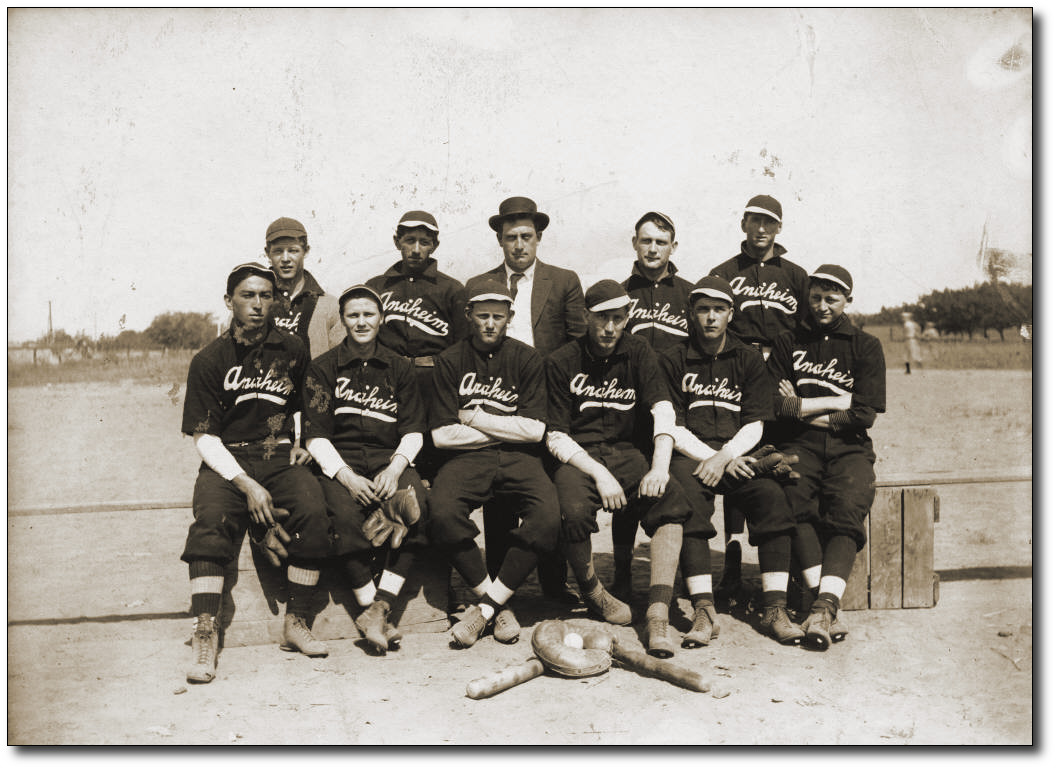
As I watch news coverage of the ongoing economic crisis and responsive stimulus legislation, I am constantly reminded of Abbott and Costello’s “Who’s on First” routine, where the comics discuss names of their team’s baseball players:

Abbott:  Well, let’s see, we have on the bags, Who’s on first, What’s on second, I Don’t Know is on third…

Costello: That’s what I want to find out.

Abbott: I say Who’s on first, What’s on second, I Don’t Know’s on third.

Costello: Are you the manager?

Abbott: Yes.

Costello: You gonna be the coach too?

Abbott: Yes.

Costello: And you don’t know the fellows’ names?

Abbott: Well I should.

In October 2008, when the sky was falling, and several of the biggest entities in the financial system collapsed, economists and journalists couldn’t bring themselves to say the “R” word.

We were deep in a Recession, as it turned out.  This recession started nearly a full year earlier, in December 2007.  But the National Bureau of Economic Research(NBER), which makes the call based on economic statistics over a period of months, allowed us to endure the near collapse of the financial system without an official proclamation.

Costello: Well then who’s on first?

Abbott: Yes.

Costello: I mean the fellow’s name.

Abbott: Who.

Costello: The guy on first.

Abbott: Who.

Costello: The first baseman.

Abbott: Who.

While economists and journalists did focus on the credit crisis, conveying the dire nature of what they were seeing, and making suggestions that we might be heading toward the unthinkable – a Great Depression Sequel – we still couldn’t use the word Recession.

Then, in December (after it was announced we had been in a recession all along), the press sought to make up for lost time.  Missing out on a full year’s worth of recession talk, they cut loose with a flurry of descriptors:  a deep recession, prolonged recession, economic crisis, catastrophe, financial disaster and what may turn out to be true, the worst downturn since the Great Depression.

Costello: The guy playing…

Abbott: Who is on first!

Costello: I’m asking YOU who’s on first

Abbott: That’s the man’s name.

Costello: That’s who’s name?

Abbott: Yes.

Costello: Well go ahead and tell me.

Abbott: That’s it.

Costello: That’s who?

Abbott: Yes.

750 banks fell within months of the 1929 stock market crash which began The Great Depression.  As many as 9,000 banks continued to fail during the 1930’s.  FDIC Insurance was nonexistent, so people simply lost their money when their bank ran out of funds.

13 banks have failed so far in 2009.  Another 25 failed in 2008.

The contemporary government response has been swift, if not altogether logical.  

Deposits up to $250,000 are now guaranteed by the federal government.  Under the TARP bailout program, banks may be given funds to keep them solvent and lending.  There is a fair amount of confusion over the purpose of the program and whether healthy banks or failing ones are actually seeing the government support.  Some initial money went to Citigroup, a behemoth multi-national organization considered “too big to fail” following the events in October of 2008, when investment bank Bear Sterns failed and cracked the confidence of the entire financial system.

Costello: Look, you gotta first baseman?

Abbott: Certainly.

Costello: Who’s playing first?

Abbott: That’s right.

Costello: When you pay off the first baseman every month, who gets the money?

Abbott: Every dollar of it.

The initial $700 billion bailout was passed in November of last year and was renamed a recovery package in December.  That was soon followed by a $789 billion stimulus bill.  And as furious as we all are at the cost of this crisis, be ready for toxic asset and real estate stabilization plans which will likely total even more than these first two.

Only $500 billion of the stimulus bill is true government spending.  The rest is tax relief or, in the case of the bailouts, investments in companies that should, in theory (it worked before in Sweden), allow the government to recoup the invested money in a few years.

Costello: All I’m trying to find out is the fellow’s name on first base.

Abbott: Who.

Costello: The guy that gets…

Abbott: That’s it.

Costello: Who gets the money…

Abbott: He does, every dollar. Sometimes his wife comes down and collects it.

Costello: Whose wife?

Abbott: Yes.

The original stimulus bill was designed to create 2-4 million new jobs.  Then, as the economy began losing a 500,000 jobs a month, the language changed to “save or create” 3-4 million jobs.

Politicians and pundits who say the stimulus bill will turn the economy around may overstate the case.  So too, those who doubt it will save or create a single job.

A more reasonable assessment is that it will soften the blow and make a long-lasting recession more tolerable.

What We Wont Learn from the Sotomayor Confirmation Hearings

By Marc Seltzer; originally published on July 11, 2009, at politicsunlocked.com

. .

If there is one legal question that is profound and topical, the discussion of which would be deeply thought provoking and educational in the Supreme Court nomination hearings of Judge Sonia Sotomayor, it is the constitutional division of power between the different branches of government.

The power struggle between the branches is most notably implicated in the national debate over the Bush administration’s conduct of foreign policy and war.  President Bush and Vice-President Cheney asserted generally exclusive executive branch authority in the conduct of intelligence, detention of prisoners and avoidance of oversight in national security operations after 9/11.

Now that Bush and Cheney are out of power and more information is coming out about their conduct, opponents of such policies are on the attack, calling for investigation.  Only the most recent issue is whether Vice-President Cheney directed that the CIA withhold information from Congress that Congress has by law, demanded that the executive branch provide.  Other red-hot manifestations are whether the use of torture by the administration can be subject to explicit laws banning such activity, and whether the President was in fact required to brief congress regularly on its conduct of foreign policy and military action, as Congress has demanded.

Underlying this and other such conflicts is the question of constitutional authority in the different branches of government.  The President is the Commander-in-Chief.  Does this grant the President sole authority for decisions relating to national security, or is it an authority shared by the peoples’ representatives in Congress?

In the same vein, what are the limits of such Presidential authority?  Can the President authorize torture if he believes it is necessary for national defense?  If Congress requests that the President provide information on on-going military operations, can the President ignore the request if he believes that to follow it will harm the operations?

The ultimate answers to these questions cannot be known until the U.S. Supreme Court decides each issue in the context of specific facts presented in a lawsuit.  But a Supreme Court nominee could give us her reflections and a certain education.  This would be far more meaningful then the competing assertions of power by the administration and congress.  Of no more use are the pundits and professors who weigh in.  Almost universally, commentators take political positions based on desired outcomes, but give no real insight into what the Supreme Court would be likely to do.  The Supreme Court is deeply aware of its profound power and cautious about its legitimacy in asserting its authority over other branches of government – being the unelected branch.   Pundits have none of this real world caution.

Consequently, the Supreme Court tends to go to great lengths to avoid constitutional questions, instead deciding cases on smaller technical matters whenever possible.   There is nothing wrong with this judicial approach, except that it leaves many of us wondering where the bounds of legislative or executive power really are.

I, for one, have no doubt that they are not where the President and Congress say they are.

Supreme Court Reverses Sotomayor Panel in Ricci Case

By Marc Seltzer; originally published on July 8, 2009 at politicsunlocked.com

. .

The Supreme Court recently overturned an opinion issued from a three-judge appellate panel including Supreme Court nominee Judge Sonia Sotomayor. The core of the case turned on how a government agency, in this case the city of New Haven, Connecticut, should deal with potential discrimination against minority employees.

The city took a number of steps to address concerns about discrimination in promotions for fire department officer positions, such as making great efforts to create a race-neutral test and ensuring that minority officers from other departments participated in the candidate evaluation process. The lawsuit arose when the city decided to throw out the results of the firefighter promotion exams because no African-American applicants achieved top scores, meriting promotion.

The Supreme Court decision sheds some light on how government entities are expected to handle discrimination concerns. However, it does not fit as nicely into the affirmative action debate as commentators claim. It also fails to provide any significant evidence against Judge Sotomayor’s promotion to the U.S. Supreme Court.

It was white and Hispanic firefighters who sued the government in Ricci v. DeStefano when their success on the exams was disregarded. They lost their case in the lower courts and petitioned the Supreme Court for a final review. The Supreme Court found that once the promotion exams were completed, the city needed evidence that the exam was discriminatory, beyond just the results themselves, to justify disregarding those results. This, the city did not have. It had a history of discrimination, where only one of 21 fire captains was African-American, and it had a fear of lawsuits from unsuccessful black candidates, a legitimate concern recognized in the law guiding cities’ decision making on employment matters, but it did not have evidence that this test was unfairly discriminatory.

The Supreme Court decision was 5-4, with Justice Anthony Kennedy writing an opinion joined by Justices Scalia, Thomas, Alito and Chief Justice Roberts. The decision does not seem to overturn much law on affirmative action or to allow discrimination against minorities to go unchecked. It does say that once a hiring process is completed and candidates are ranked for promotion, it should not be upended without evidence that it was faulty.

The dissent would have allowed the city to disregard the test results in light of past discrimination and suspicion and potential legal challenges over the results themselves. There was evidence that another type of exam process might have yielded different results and the dissenting opinion considered that sufficient to put the test results into question and justify the city’s action.

Judge Sotomayor, along with two other appellate judges, had agreed with the trial judge that the city was within its rights to redress what it perceived was a problem in the test results. Justice Sotomayor will be asked about the decision in the nomination hearings next week. However, her position was hardly the type that should concern the judiciary committee reviewing her nomination. Sotomayor followed existing law on an issue where there is obviously substantial disagreement.

Why Health Care is So Expensive

Originally published at politicsunlocked.com on June 29, 2009

As the health care debate moves forward, the mess of issues surrounding why health care is so expensive is finally being fleshed out.

Private insurance and costs for health care make up great deal of our national economy. If we were all receiving excellent care and had few complaints about the system, the fact that it costs so much might not be a problem.

However, companies can ill-afford insurance costs when they offer insurance to employees and compete in a global economy. Some of our most successful corporations, those that have “adapted” to international competition such as Walmart, have dropped health care insurance for their employees. Others such as automobile manufacturers and airlines could not compete partly because of the growing costs of health care plans for current and retired workers. Bankruptcies have resulted and health care plans for retired workers have been trimmed or eliminated in the process.

About eighteen percent of the population is uninsured and are likely to avoid some care that would be important for good health and then pay for private care on their own or use expensive public resources without paying for care.

Even the insured have complaints about the system. The public often blames the insurance companies for skimping on coverage and profiting unfairly. While Americans who have employer-provided insurance are most often satisfied with their health care, those who have to obtain insurance privately have great concerns about exclusions of pre-existing illness and recession of contracts for insurance after they become ill.

A recent New Yorker article attempted to discover why the costs in different areas of the country differ dramatically. The article is a must-read for sorting out one aspect of health care: can costs be lowered while still providing excellent care? The writer, an M.D. himself, Atul Gawande, interviewed doctors in two Texas areas, where statistics show widely different costs per person for about the same health care outcomes for their patients. In one section of the article, Dr. Gawande recounts a conversation with doctors from the more expensive health care area:

Some were dubious when I told them that McAllen was the country’s most expensive place for health care. I gave them the spending data from Medicare. In 1992, in the McAllen market, the average cost per Medicare enrollee was $4,891, almost exactly the national average. But since then, year after year, McAllen’s health costs have grown faster than any other market in the country, ultimately soaring by more than ten thousand dollars per person.

“Maybe the service is better here,” the cardiologist suggested. People can be seen faster and get their tests more readily, he said.

Others were skeptical. “I don’t think that explains the costs he’s talking about,” the general surgeon said.

“It’s malpractice,” a family physician who had practiced here for thirty-three years said.

“McAllen is legal hell,” the cardiologist agreed. Doctors order unnecessary tests just to protect themselves, he said. Everyone thought the lawyers here were worse than elsewhere.

That explanation puzzled me. Several years ago, Texas passed a tough malpractice law that capped pain-and-suffering awards at two hundred and fifty thousand dollars. Didn’t lawsuits go down?

“Practically to zero,” the cardiologist admitted.

“Come on,” the general surgeon finally said. “We all know these arguments are bullshit. There is overutilization here, pure and simple.”  Doctors, he said, “were racking up charges with extra tests, services, and procedures.”

This does not demonstrate that the problems of health care costs are all related to decisions made by doctors. But research shows that the outcomes of care provided in lower-cost areas can be as good as that provided in high cost areas. If this is the case, insurers, the government and the public pay more than what is necessary through premiums, co-pays and taxes. A change in the care prescribed by doctors could save everyone a great deal of money without providing less care. In fact, patients would endure fewer tests, less and medical procedures than they are currently made to face.

Much of the current debate focuses on the politics of health care. People imagine a war between socialism and capitalism fought in the guise of health care reform. Good financial reform will be much more specifically tailored to deal with the problems in the current system and hopefully will give us more for less.

What can Canada teach us about banking regulation?

By Marc Seltzer and Leslie Schreiber; originally published as “Northern Light” on June 19, 2009, in Commonweal Magazine and at Commonwealmagazine.org.

US Regulatory Reform Follows Canadian Model

. .

Amid the greatest worldwide financial meltdown since the Great Depression, there have been few examples of sound financial management and regulation. Public authorities have had to provide billions of dollars to support ailing institutions and have acknowledged far-reaching gaps in public oversight. Responding to the disastrous bubble and bust, the Obama administration is calling for comprehensive reform. International leaders have even gone so far as to call for the creation of a world financial regulator.

U.S. Treasury Secretary Timothy Geithner, while not going that far, is asking Congress to grant the Treasury broad oversight authority for virtually all financial institutions, and a mandate to monitor systemic risk. Additional proposals seek to insure that financial instruments, such as credit-default swaps, are subject to federal regulation. While Congress will ultimately be responsible for crafting legislation, Geithner’s proposals provide a road map for a new financial order, in his words-“not modest repairs at the margin, but new rules of the game.”

The economic crisis has tested the stability of financial systems across the international community. The results differ widely, from Iceland’s near-bankruptcy to Canada’s remarkable financial health and insulation from risk. Beyond the private gains and losses, the crisis has revealed strengths and weaknesses of different regulatory environments. Remarkably, not a single major Canadian financial institution has needed a bailout. In March, the International Monetary Fund praised Canada’s banks for their “remarkable stability amid the global turbulence.” Howard Kaplow, an investment executive and director of financial services in Montreal, noted that Canadians “tend to be more conservative, but we also have a more restrictive financial authority with tougher rules to follow.” The IMF agrees, commending Canada’s “strong regulatory and supervisory framework.”

In this light one may ask how Secretary Geithner’s proposals for regulatory reform measure up against the Canadian model. Are the Obama administration’s efforts to monitor systemic risk and regulate all substantial financial entities and instruments in line with the Canadian approach?

In contrast to Canada’s conservatism, the U.S. system has gone through a period of “irrational exuberance.” Over the past twenty years, Congress deregulated financial industries in order to maximize business opportunity. New financial instruments, markets, and conglomerates were unleashed without oversight. In a recent debate over the causes of the crisis, New York University Professor Nouriel Roubini (nicknamed “Dr. Doom” for having predicted the current crisis) argued that, “deregulation occurred too fast and in ways that did not provide prudential regulation for provision of the financial system.”

The dominant political ethos was trust in free markets, competition, and modest regulation-even self-regulation. Where regulators did act, they followed a framework that called for distinct regulators in compartmentalized markets. The FDIC has been highly praised for its success at handling the closing of failed banks, but neither the FDIC nor the Federal Reserve had authority to intervene when an investment bank or insurer acted unwisely or teetered on the brink of bankruptcy.

In the end, the failures were systemic and pervasive. They could not be limited to one sector of the financial system, nor were they detected by any existing regulatory agency. In warning that the problems would not respond to a quick fix, President Barack Obama observed that the crisis “didn’t result from any one action or decision. It took many years and many failures to lead us here.”

New regulations were contemplated long before Secretary Geithner was confirmed. Former Treasury Secretary Henry Paulson and the General Accounting Office oversaw substantial groundwork in 2008, but it now falls to Geithner to finish the job. While Geithner is promoting a more comprehensive regulatory regime, the proposals have been developed by financial and market experts and insiders who believe in free-market capitalism. They do not wish to stifle financial innovation. Instead, the aim is to protect the overall system while allowing risk-taking activity to continue. This approach is in line with the Canadian system, where, despite strong regulatory authority, the financial sector has prospered. Today, five of the country’s banks are among the top fifty banks in the world. Ten years ago none of them was.

The lead financial regulatory authority in Canada is the Office of the Superintendent of Financial Institutions (OSFI), currently headed by Julie Dickson. She chairs the Financial Institutions Supervisory Committee, which has broad authority to monitor systemic risk and, for that purpose, brings together regulators who oversee market stability, risk-management, and business practices from across the financial economy. The OSFI mandate covers “all banks, along with federally regulated property, casualty, and life insurers, and trust and loan companies, plus about 10 percent of private pension plans” according to OSFI spokesman Jean Paul Duval. If any of the institutions “raise a red flag, the OSFI can implement a range of disciplinary measures, affecting everything from bank capitalization to controlling assets, and even getting directly involved in business planning.” Indirectly, this also includes securities firms, which are 70-percent bank-owned in Canada (for example, RBC Dominion Securities is part of the Royal Bank of Canada). The OSFI oversees 450 banks and insurers, and approximately 1,350 private pension plans. Its authority, while not reaching all financial institutions (hedge funds are not regulated by the OSFI), is fairly comprehensive and is foundational for the soundness of the Canadian system.

Secretary Geithner told Congress in March that the oversight he was proposing “would include bank and thrift holding companies and holding companies that control broker-dealers, insurance companies, and futures commission merchants, or any other financial firm posing substantial risk” (emphasis added). Not every financial entity reaches the size and significance to affect systemic risk, but Geithner wants to avoid a system where the legal form of an entity can be used to shield it from regulation. A key component of meaningful oversight is the ability of the regulator to set standards for institutional risk management. Geithner is asking Congress for authority to increase capital requirements, to restrict leverage ratios, and to enact additional prudential rules.

In Canada, the OSFI has substantial experience with such oversight. According to Duval, since its creation in 1987, the OSFI “has always been vigilant in the development of its risk-management practices.” Capital requirements for Canadian banks have been held at 7 percent, while the global average is closer to 4 percent. Similarly, Canada’s bank-leverage ratio has been kept under twenty-to-one, while international bank leverage ratios were thirty-to-one and even forty-to-one. OSFI Superintendent Dickson remarked in November 2008, “We have seen how strong capital cushions in Canada have paid off to the benefit of our institutions and overall financial system.”

Canadian institutions were not free from risk-taking or even from exposure to subprime loans from the United States, but strong capital and leverage standards kept the damage from overwhelming Canada’s banks, let alone destabilizing the economy. In addition, Canadian banks generally still maintain the mortgage portfolios of loans they originate, retaining direct knowledge and responsibility for their management. These conservative practices reinforce sound regulation, and vice versa.

Canadian regulators give special attention to larger, “too big to fail” organizations. Duval explains that “OSFI utilizes a risk-based methodology, where institutions that we believe are operating in a riskier manner are subject to increased supervision. That said, the larger institutions will be operating in larger parts of the market, so [they] would naturally receive greater attention…and can be subject to different supervisory requirements.”

Similarly, the U.S. federal regulator proposed by Geithner will have the power to step in and manage problems when institutions fail to meet prudential standards or find themselves in financial difficulty. Special consideration would be given to entities deemed “too big to fail.” Geithner is asking Congress for the flexibility to intervene where there is risk to the wider economy. He has already intervened with a few of the big banks. Recent “stress tests” resulted in some banks being required to raise capital, although banks could choose whether to seek private or public funds.

Critics have called for regulations that would cap the size or restrict the legal structure of financial institutions. However, noting that other countries have allowed hybrid entities such as Canada’s banking and securities conglomerates, Geithner appears to trust that oversight will protect the system, and that private decision making should be allowed as much leeway as possible. The changes he proposes will require legislation. Under his lead, the Obama administration should be pushing hard for a substantial increase in federal regulatory authority. What might have been politically impossible before the crisis is now high on the legislative agenda. In addition, the chairman of the Federal Reserve, Ben Bernanke, has spoken in concert with the administration. While Congress will take a significant role in designing new regulation and is not likely to rubber-stamp the administration’s proposals, momentum is strong for the creation of comprehensive financial reform. The success of the regulatory system across the border should inspire both humility and hope.

Tweeting the News from Iran

By Marc Seltzer; originally published June 17, 2009 at http://www.politicsunlocked.com/index.php/article/tweeting_the_news_from_iran/25911

. .

Reporting through Twitter while other outlets are banned

A literary theme familiar in the United States is that government may one day use technology to oppress its people. George Orwell’s novel Nineteen Eighty-Four planted the seed of awareness in the Western mind, and as radars have come to watch our speed on the road, cameras look for criminal behavior indoors and satellites listen to our telephone calls, we have become concerned about the growing power of “Big Brother.”

Could Orwell have imagined that the tables may be turned on oppressive governments in the 21st century? Following the June election in Iran, the Islamic Republic is turning off the technology in hopes of restricting communications among its stirring populace. Journalists are restricted from covering protests. Major news organizations are unable to penetrate the events with video cameras and microphones.

However, regular Iranians are reporting from the streets by Twitter. A social networking site popular among celebrities, Twitter conveys short messages, including images and websites by Internet URL link from a cell phone, handheld digital device or computer. Followers around the world receive updates from the homes, offices and streets of Tehran.

To get a sense of what can and cannot be conveyed in the 140 characters that each “Tweet” is limited, to I have copied a recent series of communications (each of the following paragraph blurbs were originally separate “Tweets”):

  • it is now dawn in tehran – streets are quiet – we must move from here – this was good internet connection but not ours – #Iranelection
  • last night thousands stayed in streets between Parkway and Vanak sq until after 2am – #Iranelection
  • unconfirmed – several Generals have been arested – #Iranelection
  • unconfirmed – military has refused orders to shoot protesters – #Iranelection
  • Kamenei is under pressure and fighting for survival – without ANejad his authority is finished – #Iranelection
  • large demo today outside tehran tv-radio headquerters – Karroubi attended – #Iranelection
  • support for Mousavi in Tabriz is v-high – many protests – #Iranelection

While Twitter is not a major news outlet with live reporting and video, it is still contemporaneous to the events reported. There are questions of credibility as a consequence, such as who is really Tweeting, which we cannot always know. In fact, some Twitter communications have warned that the Iranian Government is setting up fake Twitter sites, spreading false information to protesters.

On the other hand, Twitter has been used to guide hundreds of thousands of protesters to rallies and redirect them quickly and efficiently when locations or times are changed. Reports on the arrest of leaders, the number of participants at government and opposition rallies, and action or lack of action by the police and military are also reported.

A few of the hot Twitter sources are: “Persiankiwi”, “Irannewsnow”, and “StopAhmadi”. The U.S. State Department reportedly asked the executives at Twitter, located in California, to forego a scheduled maintenance shut down in order to keep the Tweets coming during the Iranian crisis. Traditional print and broadcast reporters have been told that they cannot report on events in Iran without permission of the government, and that permission is not being given freely. As events unfold, you may be able to piece together facts on the ground in Iran using updates from Twitter sources.

While the outcome of the election conflict in Iran remains to be seen, at this point, the public is using technology to further democratic ends. Where there is no free press, information still flows from person to person through the Internet. Where the government tries to restrict public assembly, instant communication helps people organize and connect in protest beyond the reach of the government. And, where the government tries to control the story, the truth gets out. George Orwell, who wrote during the consolidation of Soviet authoritarianism, might be surprised. He would certainly be pleased.

Justice Sonia Sotomayor Fits the Obama Mold

By Marc Seltzer; originally published on May 29, 2009 at politicsunlocked.com

. .

The nomination of Justice Sonia Sotomayor to the U.S. Supreme Court fits perfectly with President Obama’s vision for good government: independent intellect, moderate politics, and pragmatism.

Sotomayor is a first generation Puerto-Rican American of humble upbringing. She distinguished herself academically, graduating summa cum laude from Princeton and editing the Yale Law Journal. Like Mr. Obama she proved herself and opportunity followed academic excellence.

Sotomayor has acknowledged that being Hispanic and a woman may be qualifications, or at least qualities, important to her professional career. “I would hope that a wise Latina woman with the richness of her experiences would more often than not reach a better conclusion than a white male who hasn’t lived that life,” she said in a speech. This differs from President Obama who hesitated to make distinctions part of his political language and for whom “we” most often meant middle-class Americans.

Republicans have attacked Sotomayor’s remarks as identity politics and raised fears of a judicial philosophy of preferences. But is this just grasping for straws?

First, simply, is the question of what she meant. Did she mean that it was about time for women and Hispanics to be better represented in government service? After all, there have been 110 Supreme Court Justices since the nation’s founding, and only two have been women. None have been Hispanic except Justice Benjamin Cordozo, of European Jewish ancestry, who may have had Portuguese bloodlines a few centuries back. Arguing that Cordozo keeps Sotomayor from being recognized as potentially the first Hispanic on the Court is nonsense.

Or did Justice Sotomayor mean that experience in life – adversity, discrimination, and disadvantage – helped her to build character and taught her about life in a way that wealth and social status might not have?

Conservatives may worry that she would be an advocate for women and for minorities on the court, emphasizing sympathy over the legal rules. This treads into especially difficult waters. Politically, liberals have often taken up the causes of women’s and minority rights. In the legal context, at least, conservatives have opposed affirmative action, or race-conscious government actions as reverse discrimination.

Commentators refer to decisions rendered by Ms. Sotomayor as technical and narrow rather than ideological and sweeping. In one case she emphasized how “embarrassing and humiliating” the school strip searches can be to teenage girls. Is this comment a sign of prejudice and activism? Because Sotomayor’s decisions are mainstream and are specific responses to facts rather than sweeping pronouncements of political theory, it is a stretch to find in them judicial activism or bias.

What is easier to find is pragmatism. Justice Sotomayor is known for concentrating on the facts of each case and for diligence and care in crafting her decisions.

A Judicial Review: Justice Richard Posner

By Marc Seltzer; originally published on May 20, 2009 at politicsunlocked.com

. .

A potential candidate for the U.S. Supreme Court?

Justice Richard Posner of the U.S. Court of Appeals for the 7th Circuit is a giant in the field of legal theory. In association with others at the University of Chicago Law School, Posner is a chief architect of a movement called “law and economics”: efforts to bring free-market economic thinking into legal theory. Consequently Posner is known as a conservative for his economic principles. However, he does not take broad ideological positions. For example, he supported the government’s recent efforts to stimulate the economy using public funds, but he opposed the use of tax rebates because he concluded that the public would save this money rather than spend it. Instead, he endorsed spending on roads, bridges and other infrastructure, generally in line with Democratic Party positions.

Justice Posner is also a unique Supreme Court candidate because he has expressed so many opinions outside of the courtroom. He has written 40 books and hundreds of articles. He also maintains an active blog with colleague Gary Becker and is considered the most prolific justice in U.S. history. He has expressed support for environmental regulation, abortion rights and other principles that make him appear socially liberal. On the other hand he has supported a powerful government in the context of national security, defending the use of torture and limiting press freedoms in a way that is not popular with critics of the Bush administration.

Can such a person be nominated to the U.S. Supreme Court?

In the past, this would not have been a problem. However, since the 1980s, every Supreme Court nomination has become a power struggle and performance where the political parties attack the other side and try to score points while painting the opposition as extreme. The nomination of Posner would be difficult because it would appeal to centrists from both parties, but it would also be a sitting duck for attack by ideologues from both parties.

The question for President Obama is whether he believes Posner would make a great justice. Obama knows Posner from their time together on the faculty at the University of Chicago Law School. They share a pragmatic view of politics and policy. Is the President willing to apply his political capital in support of a candidate who will draw fire from his own party? Is Obama comfortable appointing a justice with such an independent mind that his judicial decisionmaking is difficult to predict?

A Judicial Review: Professor Cass Sunstein

By Marc Seltzer; originally published on May 13, 2009 at politicsunlocked.com

. .

Harvard Professor Cass Sunstein is 54, the same age as Justices Kim Wardlaw and Sonia Sotomayor, profiled here in recent weeks. A longtime Professor at the University of Chicago Law School, where he was a colleague of President Barack Obama, Sunstein is one of the country’s leading legal scholars. He has published widely with particular interest and expertise in environmental issues, information technology, and behavioral economics.

Sunstein is referred to as a liberal, but his political philosophy is not easy to categorize. He would appeal to some conservatives because of his belief that judges should carefully limit their focus to the case at hand, leaving the larger legal rulemaking to legislators. Mr. Sunstein supported the nomination of Bush appointee John Roberts Jr. to the Supreme Court. Roberts had articulated this philosophy of judicial minimalism in his Senate confirmation hearing.

However, when Justice Samuel Alito was nominated by President George W. Bush, Mr. Sunstein wrote a detailed analysis of Alito’s conservative rulings arguing that Alito was a “conservative’s conservative.” The op-ed did not overtly oppose Mr. Alito’s nomination, but it sought to make plain theesssential conservatism of Alito’s positions.

This type of record is something that would not be available for those considering Professor Cass as a nominee to the high court. He has not served as a judge and has no record of judicial decision-making to dissect.

Professor Sunstein left the University of Chicago to join the Harvard Law faculty this academic term, and in January was nominated by the Obama administration to be head of the Office of Information Technology and Regulatory Affairs.

He is extremely creative and forward-thinking. His most recent book Nudge: Improving Decisions about Health, Wealth, and Happiness, which he co-authored with Richard H. Thaler, discusses a framework for moving society’s decisions in the right direction.

Responding to the question, “How does anyone determine what’s “good”? How do we determine what’s good for the environment?” in a recent interview, Sunstein explained,

“For most nudges, we’re thinking of people’s good by reference to their own judgments and evaluations. We’re not thinking that the government should make up its own decision about what’s good for people. The environment can fit within that framework to a substantial extent, but it has a wrinkle, which is that often when we buy certain goods or use certain energy or drive certain cars.…we inflict harm on others, so our own judgments about our own welfare aren’t complete. We want nudges that do help people who are being nudged but also help people who are harmed by those who are not taking adequate account of the risks they are imposing on other people.”

Sunstein’s pragmatism also seems a good fit for President Obama, demonstrated in the following quote:

“I think on a lot of problems, including environmental problems, we can make progress without getting stuck on issues that divide people. The price system can be used in a way that fits with people’s moral obligations. If you’re inflicting harms on other people but the costs of your actions (become) higher, then you’re probably going to inflict lower harms on other people. One of the great tasks of the next decade is to ensure that when people are creating risks though their daily activities, that they bear the cost.

I believe also that one big motivator of behavior is economic and another big motivator is moral, and for certain environmental activities we should appeal to people’s conscience. A lot of people are buying hybrids not because they save money, which they might, but because it’s the right thing to do. I just bought a hybrid myself. The reason I bought it was moral.”

Fundamental to Sunstein’s public policy theory is the idea that more information makes people more able to get the right outcome. If Sunstein is nominated to the Court, or if he is confirmed in the position at the Office of Information Technology and Regulatory Affairs, we should expect to receive an education.

Immigration Solutions

By Marc Seltzer; originally published May 12, 2009, at care2.com

. .

Last month, after President Obama announced the beginning of a discussion on immigration reform, I wrote a blog discussing the fundamental political conflict at the heart of the matter:  Legalization for twelve million or so immigrants, whose status is currently illegal.

The two solutions offered by opposing sides are:  (1) strict enforcement of current law, leading to deportation of the illegal work force and those family members without legal residence; or (2) legal status and a path to citizenship with a fine for breaking the law.

The first option is not realistic because of the human costs, economic disruption and political beliefs of the majority of Americans and their representatives.  Those who see this as a black and white issue, where illegal means “no rights” are missing the historic context of a nation built on immigrants and hard work, not entitlement and status.  It’s not that illegal immigration is right, it’s that this solution is not right.  The nation may or may not be capable of policing its borders, but it is not capable of ten million deportations.

The second option is essentially the same “Amnesty” program that was implemented under President Ronald Reagan, with the addition of a potentially significant fine to punish and discourage the immigration law violations.

There has not been much discussion of the fine or potential restrictions of this type of legalization.  This may be where there is some room for compromise.  There is no reason that the fine could not be substantial, that the path toward citizenship could not be long, or that some immigrants could not be put in legal worker programs, where they would not be entitled to a path to citizenship without further application along with other non-resident applicants.

A stricter, more “punishing,” legalization program would serve to discourage illegal immigration in the future, especially if legal quotas for immigration kept up with the labor needs of U.S. employers and employers who broke the law were sanctioned.

If the second option (legalization) can be achieved politically, then the 12 million people who can take advantage of the program will come out from the shadows of the law and establish legal identities in the American system.  If this option cannot be achieved politically, the status quo may continue for another period.  This option has many negative consequences.   For the illegal residents, they suffer exploitation and lack of legal participation in the society in which they live.  Society loses their number in the census, in some tax collection and public allocation of resources.  Unfair competition with the legal workforce is also a problem.

So far, anti-legalization forces have not shown an interest in creative compromise.  It’s time they did so.  The failure to enact legal reform does not create a better real-world solution.  Helping to create an immigration program for the future that is realistic and firm is the best way to get the legal framework in line with an enforceable legal reality.