Category Archives: Uncategorized

Immigration 2009

By Marc Seltzer; originally published on March 19, 2009 at care2.com

. .

No Easy Answers

The announcement that President Barack Obama will begin a public discussion of immigration reform in May will reawaken debate on a highly contentious issue.  At core, the issue pits those fiercely opposed to allowing illegal residents in the United States to convert their status to legal residency against those who, albeit with conditions, seek to legalize most of the U.S.’s estimated 12 million illegal residents.

Political Risks

If the President follows his campaign position in seeking a legislative solution that includes offering legal status to those in the country illegally, he will be investing his political capital in an extremely divisive issue at great political risk.

Prior to the 2008 election in which Democrats gained in both houses of congress, anti-illegal immigrant forces had the upper hand.  While Democratic gains make the congressional votes for reform more plausible, the economic crisis and growing unemployment will intensify concern that giving illegal residents the opportunity to obtain legal status will make already-difficult competition for jobs that much worse.

The President will have his hands full with this one and risks a political fight of an uglier, nastier and more divisive nature than even the financial turmoil has wrought.

Increasing Attention and Concern

The economic crisis and growing unemployment is likely to increase opposition to immigration generally and make compromise more difficult.  However, some commentators such as Thomas Friedman, in his NY Times column, have noted that allowing more legal immigration could bring wealthy immigrants eager to buy homes, shoring up the contracting real estate market.

Illegality is troubling, but what are the alternatives?

Illegal immigration presents the difficult combination of illegal entry into the United States, perceived competition for jobs, and use of public resources that is a too-bitter pill for many Americans.  Yet with nearly 12 million illegal immigrants residing in the United States, it is difficult to realistically imagine a solution that does not involve granting some form of legal status.

One approach would be to grant permission to work for a period of years, without giving traditional legal permanent residency, which begins a path towards citizenship.  However, advocates of a path to citizenship for illegal immigrants, recognize that people who have effectively moved to the U.S., will likely be in financial and family jeopardy if they are forced to leave after having lived for five, ten or more years in the United States.  This type of compromise has not received significant support from immigration opponents, either, who chafe at the idea of rewarding those here illegally with any form of legitimate legal status.

Reagan’s Leadership, or a matter of time?

One thing is certain, poor management of the immigration issue in the past has set up a nearly impossible predicament in the present.  Congress could have largely managed the issue by raising legal immigration quotas sufficiently to keep up with the needs of employers during the 1990s and first decade of the new century.   Instead, the demand for labor far outstripped the legal supply and the debate shifted to unrealistic proposals of effective border enforcement on the one hand and mass deportation on the other.

In the end, Obama’s political skill and the Democratic congressional majorities may forge a “legalization” solution, much as Ronald Reagan did in 1986.  However, the opposition will be charged, and losing control of the issue could not only lead to defeat of immigration reform, but chip away at the President’s momentum and, so far, commanding authority.  While both sides in the debate should compromise and seek to offer creative solutions to the real problems that exist, within their principles, there will be those primarily looking to use the issue against Presidential authority and to position candidates for the 2010 congressional elections.

What to expect, at least initially

President Obama will likely push for a legalization process that aims to implement legal status after the recession eases and the unemployment rate declines.  Mr. Obama is opening the debate in May, and it would not be a surprise for legislation enacted in 2009 or 2010 to provide opportunities for legal status in 2010, 2011 or 2012, when employment is predicted to increase, if the recession ends.

Any proposal is likely to impose penalties and conditions as an attempt to deal with and discourage “unlawful” entry and residence.  More today than in the past, surveillance technology at the border and electronic identification procedures in the workplace make future enforcement of immigration laws possible, although by no means guaranteed.

UPDATE: In Immigration Solutions I push towards a compromise and ask both sides if they are willing to meet half way.  Whether it was because his hands were full with health care of because the prospect for immigration reform legislation was not good, President Obama has put off immigration legislation for at least a year.  In a later post I will review what is going on in enforcement and changes that result from the economic downturn with respect to illegal immigration.

Challenging Obama’s Presidency

Originally published December 22, 2008, at politicsunlocked.com


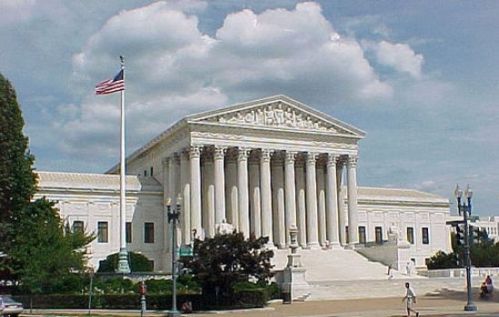
United States Supreme Court

United States Supreme Court

Photo by dbking licensed http://creativecommons.org/licenses/by-nd/2.0/


A little known aspect of the judicial system was made a bit more public recently, as courts have rejected lawsuits challenging the legitimacy of Barack Obama’s presidential election.

Anthony Martin-Trigona, a documented legal system abuser, did it again, filing a lawsuit regarding Obama’s citizenship in Hawaii state court. Federal courts have already imposed rules barring him from bringing any more frivolous claims to their courts.

federal appeals court has previously described Martin-Trigona’s actions and called out the harm caused by people who use our justice system for their own personal agenda without regard to the legal validity of their claims.

“To those who follow the business of the courts, the appellant needs no introduction. He is the source of literally hundreds of lawsuits, motions and miscellaneous pleadings, all but a small fraction of which lack any merit whatsoever. Viewing Martin-Trigona’s litigious conduct in its entirety yields the inescapable conclusion that he persistently resorts to legal processes without regard to the merits of the claims asserted and that he invokes those processes largely to harass persons who have unluckily crossed his path.”

And the 2nd Circuit Court of Appeals continued:

“Martin-Trigona is known to have filed over 250 civil actions, appeals, and other matters throughout the United States, which have been pursued with ‘persistence, viciousness, and general disregard for decency and logic.’  He has used legal pleadings to ventilate his contempt and hatred of persons of Jewish heritage and to level accusations which ‘have often been personal, have often emphasized racial or religious affiliations, and have often involved the members of . . . judges’ and counsel’s families.’ The purpose, nature and effect of his resort to multiple litigation has been to involve as many persons in as many confounding legal processes as possible. . . . Martin-Trigona’s voluminous filings have ‘inundated’ the District of Connecticut and his activities have burdened judicial operations to the point of impairing the administration of justice. Finally, Martin-Trigona has not desisted from his course of vexatious litigation but has expressly stated his intent to file yet more actions.”

Fox News put Martin-Trigona on the air during the campaign to impugn Obama.  The real offense, political positions aside, was that a person known for such extensive and frivolous abuse of the American legal system was given the credibility of broadcast time.

But he is not alone.  Seventeen lawsuits (so far) have been filed in various jurisdictions, claiming Barack Obama was not born a U.S. citizen, and thus, cannot become president.

The facts:

Hawaii achieved statehood in 1959.  Obama was born in Hawaii in 1961.   Obama’s birth certificate, conveying U.S. citizenship and noting birth in Hawaii’s capital, Honolulu, has been examined by the State of Hawaii and found to be authentic.

Case closed.

None-the-less, seventeen individuals have filed suit, and upon rejection of their claims by trial judges, haveappealed as high as the U.S. Supreme Court.  The legal basis of the challenges is Article II of the U.S. Constitution, requiring a president to be a natural-born citizen.  Precious resources are used, briefs read, arguments heard, all to give every possible advantage to litigants who want their day in court.  To date, the U.S. Supreme Court has rejected two petitions that have made it to the court for consideration.

The “natural-born citizen” clause has received publicity in recent years with California Republican GovernorArnold Schwarzenegger, who is an Austrian-born, naturalized U.S. citizen, appearing to emerge as apresidential hopeful, except for Article II.  Discussion was also prompted by the candidacy of Republican Presidential aspirant John McCain, was born in the Panama Canal Zone to a U.S. military family.  McCain, however, was a citizen at birth, via his parents, both citizens and the status of the U.S.-controlled Canal Zone.

Can you imagine challenges to the birth certificates of George W. Bush, William Jefferson Clinton, George H.W. Bush, or Ronald Reagan? 

Technology and the Future of Warfare

By Marc Seltzer; Originally published on January 26, 2009, at care2.com/causes/politics/blog

. .

Warfare and its violence are changing in profound ways because of robotic technologies.  Arial drones, essentially unmanned planes, operated by pilots sitting at computer consuls in the United States, are playing a greater and more violent role in warfare in Iraq, Afghanistan and Pakistan.  While initially these drones, with names like Predator, Global Hawk and Pac Bot, were used for surveillance, they are now being used to conduct battlefield operations, including targeted killings.

The new weapons are a natural outcome of technological development and the arms race.  However, they raise fundamentally new questions about the conduct of warfare.  Remotely operated machines that fight our wars present logistical, ethical and psychological challenges new to humanity.  For example, operators of these weapons systems may be trained more by XBox and Play Station gaming experience than by boot camp and military officer’s school. Accidents resulting in civilian casualties in Afghanistan may now be the responsibility of someone working in an office building in California or Nevada.  However, the increased power and savings in lives and resources are speeding these new technologies into our mainstream military operations now.

Radio talk show host Terry Gross recently conducted an important interview with P. W. Singer, author of the new book Wired For War; The Robotics Revolution and Conflict in the Twenty-first Century.  Mr. Singer talks about a world that sounds of science fiction but which is in fact part of current Department of Defense operations.

Listen to the Fresh Air program podcast from January 22, 2009, and begin to participate in this important conversation. This debate will undoubtedly take years to work through, but it must begin across America.

Barack H. Obama in Week Three: How’s He Doing?


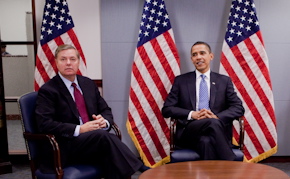
obama-and-graham

20090114_JRB_LG_BO-4206


What’s all the nonsense about Obama struggling?

The man is 47, has a sharp mind that is suited to judgment of competing ideas, makes speeches at the level of John F. Kennedy and Ronald Reagan, has a sensibility that is not so populist as to be deluded, and not so elite as to have lost touch.  He has simultaneously minority and elite status and has a genuinely all-American work ethic and positive disposition.

He begins his presidency with 58 or 59 Democratic Senators (depending on when Al Franken stops telling jokes and shows up for work) and two popular moderate and less partisan Republicans from Maine, Olympia Snowe and Susan Collins, who are not likely to stand in filibuster against him.

In the House of Representatives, Democrats number 262 to the Republicans 178, which means the President can lose more than 40 Democrats and still pass his agenda in the House.

President Obama has spent the last two years invigorating public participation and activating Democrats to tune in and take a stand.

The choices before him are complex and the problems not easy to solve.  The President has shown in just three short weeks that he is not beholden to anyone.  Liberals are irritated by his centrist nominations.  Republicans challenged his stimulus bill and lost.  Obama demanded a fast response from congress and he got one.

His decisions may or may not solve the credit crisis, real estate market collapse, or spiraling recession, but he certainly is in command.  Franklin Roosevelt made many false steps working through the Great Depression.  In the end, his policies eased the pain, but it was the publicly financed industrial development during World War II that threw off the slump and earned the United States an economic rebirth.

So too Obama may have to readjust course as he evaluates the effect of his administration’s approach to economic difficulty and the country walks a tight-rope.  When he does, critics will attack his every misstep, but if there is any clarity to be gained from his first weeks in office, it is that he will retain command.  Anticipate that this President will respond actively, and until the next election, without gridlock tying his hands.

Obama, Choose Your Battles

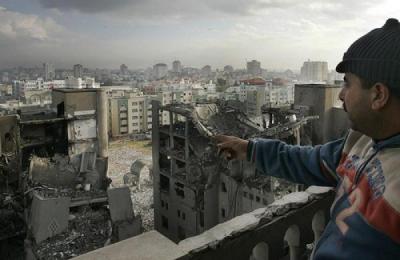
Photo credit: Amir Farshad Ebrahimi; license http://creativecommons.org/licenses/by/2.0/deed.en

By Marc Seltzer; originally published on January 9, 2009, at politicsunlocked.com

. .

Obama is undoubtedly feeling the pressure, felt jointly in capitals around the world, to help end the conflict in Gaza, where a fierce Israeli military operation, has resulted in significant death and destruction.

The U.S. has traditionally played a major role in facilitating negotiations throughout Israeli-Palestinian conflicts.  The deeply divisive and longstanding battle goes to the heart of the security and future of the state of Israel and rights to statehood and autonomous homeland for the Palestinian people.

However, despite the best intentions, the conflict in Gaza will not be solved easily.  At this point, President Obama’s involvement risks squandering substantial energy and political momentum desperately needed for domestic reforms.

A lesson from history

Republicans will remember:  The first significant act in office for President William Jefferson Clinton was to revisit the military ban on service by gay soldiers.

It was January 1992, and Clinton took on his own Joint Chiefs to establish a new compromise policy, commonly known as don’t ask, don’t tell.  Merits of the reform aside (which allowed many soldiers serving honorably to continue service) it angered the political right, which took sights on the Clinton Presidency and never looked back.

In retrospect, the action cost the Clinton Presidency dearly.  Despite significant improvements in welfare reform, balanced budgets and economic prosperity during his presidency, the Clinton Presidency never ceased to arouse conservative ire.  The animosity from the right dogged the President in office, played a role in Al Gore’s unsuccessful Presidential bid, and may have lingered into the campaign of Hillary Clinton, eight years later.

All this comes as a warning to President-elect Barack Obama:  Choose your first battles carefully.

Global perspectives

Obama would do well to remember that the U.S. is involved in other conflicts throughout the world, some demanding presidential attention. India, Pakistan, and Afghanistan, for example, have a joint population of 1.3 billion people, with robust nuclear arsenals in the first two and an ongoing U.S. military operation in the third.  All have recently been unwilling hosts to tragic terrorist violence directed against civilians.

While sympathetic in their distress, the civilian population of Gaza remains less than 500,000 people. Israel, and the greater Palestinian population number less than 8 million.

Barack Obama has spoken solemnly about his commitment to the faltering U.S. economy, the foundation of this nation’s prosperity and security.  His steady hand convinced voters that he was best candidate to keep a nasty recession from turning into something historic and much worse.  Americans will be looking to President Obama for leadership.

At least at the outset, Obama must avoid any temptation to solve all the world’s problems.  Being drawn into negotiating a cease-fire in Gaza risks squandering the new administration’s goodwill and focus.

The Right Direction Now and For The Future

To Senators Obama and Reid and Representative Pelosi:

In the sixties, President Kennedy put hundreds of thousands to work on the space program, putting a man on the moon, aptly symbolizing American leadership, and foretelling United States military superiority and civilian commercial dominance in aerospace and communications for thirty years. The technological advantage American industry gained on the investment could not have been achieved absent the governmental commitment or resources. 

In the eighties, President Reagan funded Star Wars, which achieved little in missile defense, but nonetheless, changed the world, leading to U.S. civilian computer, satellite and Internet superiority and prosperity for another thirty-year period.  The time is again right for government investment in creating the future. 

First, the beginning of a recession is a good time to act, because stimulus is helpful, jobs are at stake, and a government-funded program will immediately instill confidence in long-term labor conditions.  This is far more productive stimulus than refund checks, which do ease family budget concerns, but only  marginally improve commerce.  They do little to support employment prospects and nothing to support long-term wealth creation.

Second, there are many areas, such as pharmaceutical research, Green technologies or military hardware, that require massive investment to achieve their full potential.  No one can claim that research and development in alternative energy or pharmaceutical testing is near capacity.  Both are so financially risky that only a fraction of what could be done is being done, even though the lives of millions and the future economic health of many nations hang in the balance.  As with past science and technology programs, the initial public investment in energy, medical or environmental technology would surely be followed by decades of highly profitable private business applications.

Finally, the arguments against publicly funded investment misunderstand the real problems of government spending and deficit spending in particular.  We can agree that private investment and direction of resources is superior to public, and yet still acknowledge the need for a military, Civil Corps of Engineers, or law enforcement to meet national needs.  In the 1940s, the Government put the nation to work to produce armaments on a vast scale enabling our defeat of Fascism. Some tasks are just too large to be left to the private marketplace. 

The real question is what should public money be used for, and crucially, what should it be used for when we are over budget? 

The answers are not the same.  Most commentators today oversimplify the issues surrounding deficit spending.  They assert that a balanced budget or small deficits are always good and large deficits are bad, with the caveat that deficit spending during a recession is good as it stimulates the economy while spending during high growth periods is bad as it adds to inflation. 

Without more, neither view is adequate. 

Deficit spending is essentially borrowing from the future for the present.  Thus, deficit spending can be thought of as irresponsible, and in some ways unethical, because it uses future resources to satisfy today’s needs.  However, deficit spending only depletes future resources and weaken financial integrity when it does not lead to long-term financial health.  When such spending is for infrastructure and facilitates wealth and revenue in the future, it is neither irresponsible nor unethical. 

Such spending should be judged on the benefit versus risk of success at achieving its goals.  Kennedy’s Sending of a Man to the Moon was a huge risk, but it paid off handsomely in its political, scientific and commercial legacy.  Reagan’s Star Wars research was less of a reach and it paid off, even though the goal of the original research has still not been achieved.

In this light deficit funding for Green technologies would stimulate the economy during a recession and, if successful, would lower energy and environmental costs in the long run.   This is how prosperous periods have occurred.  Improvements in productivity mitigate inflationary pressures while increasing wealth during economic expansion.  

Politically and commercially the benefits are obvious as leadership and wealth will be the rewards to nations that meet the challenges of the future most efficiently and profitably.  Medical research presents similar cost/benefit prospects and military investment, though to a lesser extent, may also be useful given the difficulties we have had achieving military goals in the past decade.

The alternatives pale in comparison.  Giving stimulus to individuals and businesses in the form of refunds or tax cuts at a time of economic slowdown has short-term social and economic value at a cost that is roughly equal to what has to be paid back later with interest.  Investing in roads and bridges provides some job support and infrastructure upkeep, but no dynamic future benefits.  Doing nothing has such great lost-opportunity costs.  On the other hand, investing in the technology of the future will have a modest short-term economic benefit in confidence and jobs, and in the long term, if past is prologue, it will present unimagined opportunity.

Marc Seltzer