After the Spending Spree

Originally published on February 18, 2009, at http://www.politicsunlocked.com/item/after-the-spending-spree


Efforts to balance long-term budget through entitlement reform could help restore confidence.

Efforts to balance long-term budget through entitlement reform could help restore confidence.


Following the historic passage of substantial stimulus legislation, President Barack Obama must now show he is capable of fiscal discipline.  

The 789 billion spending and tax relief bill passed with overwhelming Democratic support, and despite almost unanimous Republican opposition, showing that bi-partisanship, a central theme of his campaign, proved to be harder to achieve than propose.  

The President urgently sought a short-term stimulus bill to reverse the economic decline. Now that he has achieved this goal, the President should turn his attention to the long-term fiscal health of the nation.   

Most Americans are dismayed at the fiscal irresponsibility of government leaders and feel powerless to stop the government from spending their money unwisely.  Mr. Obama has a unique opportunity to put his political weight behind drafting legislation to control long term spending, including outlays for Social Security and other so called entitlement programs, that will only take effect once the recession passes.

The government is currently committed to spend more than it is projected to take in on Social Security and Medicare.  This deficit will require spending cuts or revenue increases to make up the difference.  The public will certainly not like either solution.

Operating with a deficit is justifiable under certain conditions such as emergency needs or long term improvements, programs which could not be afforded without borrowing.  However, operating the government with a chronic deficit is irresponsible and hardly confidence-inspiring.  

If President Obama were to begin the work of entitlement reform and act with the deliberate and decisive hand that has guided his campaign and his Presidency so far, he would again succeed.  Leaders must compromise.  The public must make sacrifices.  This will truly have to be a bi-partisan effort. 

This debate must be had in the next few years, before it is too late to plan responsibly.  Why not move on it now in order to show a very skeptical public that the government is not only good at spending its money, but can manage it as well?

Bush’s Final Act

Originally published at http://www.politicsunlocked.com


thumbnail-1php4

Exercise of presidential power to commute controversial sentences.

President George Bush ended the imprisonment of two former federal border guards, Jose Compean and Ignacio Ramos, convicted in the 2005 shooting of an unarmed drug dealer as he fled across the Mexican border.

Each man had been sentenced to more than a decade in prison, not only for the shooting, but also for covering up their actions, tampering with evidence and filing false reports.

Implications for Border Enforcement

The trial and subsequent convictions in 2006, unleashed a wave of controversy as supporters of the men argued that they were too harshly, or wrongly punished for seriously injuring the illegal-alien drug runner. During a period when many in the border states demanded stricter border enforcement, advocates for the men saw the prosecutions as protecting illegal immigration and punishing aggressive border enforcement.

Law Enforcement and the Use of Deadly Force

The lead prosecutor in the case, U.S. Attorney Johnny Sutton, rejected sympathy saying that the law does not allow the use of lethal force against someone fleeing, unless the lives of the officers or the public are put in danger.  

“These agents shot someone whom they knew to be unarmed and running away,” said Sutton.

Were the sentences too harsh as some have argued?  Should President Bush have overridden the judge’s discretion and given the men their freedom?

In commuting Compean’s and Ramos’ sentences, rather than giving each a full pardon, Bush has seen that the men will soon be released from prison, but will still be responsible for fines and meeting probation obligations. 

New Foreign Policy Emerging

Originally published at politicsunlocked.com

Secretary of State Hillary Rodham Clinton

Secretary of State Hillary Rodham Clinton

(Photo credit:  Marc Nozell; license — creative commons)

Hillary Clinton’s confirmation hearing reveals Obama’s new approach to the world.

The Senate confirmation hearing of Hillary Rodham Clinton provided the first insights into Barack Obama’s foreign policy.

The nominee for Secretary of State sought to make clear the principles that would guide the administration in its approach to international problems from terrorism, wars in Iraq and Afghanistan and nuclear proliferation in Iran and North Korea.  

The most clear break with the Bush administration came in the insistence on a multilateral approach, recognizing the “overwhelming fact of our interdependence.”

“For me, consultation is not a catch-word.  It is a commitment,” Ms. Clinton stated.

Clinton also spoke for a greater emphasis on diplomacy and the use of what she labeled smart power, citing negotiation, development aid and cultural support to supplement the traditional use of military and economic power.  She cited Secretary of Defense Robert Gates, who will retain his position in the new administration, for the belief that “our civilian institutions of diplomacy and development have been chronically undermanned and under-funded for far too long.”

Ms. Clinton took a hard line however, with Hamas, currently facing a costly war in Gaza, and Iran, whose nuclear ambitions will be a high priority in the next administration. 

Clinton stated that the administration would not negotiate with Hamas until it renounces violence and acceptsIsrael’s right to exist, and told Senators that Iran would not be allowed to obtain nuclear weapons.  When asked by Senator John Kerry, Chairman of the Foreign Relations Committeehow far the administration was prepared to go in standing up to Iran, she replied, “nothing is off the table.” 

This aggressive tone may upset some Obama supporters, depending on their isolationist or less confrontational views.  There has been a nearly universal hope that after the Bush Administration’s tough talk (axis of evil) and willingness to use military force, the incoming administration would tone down the rhetoric.  

Clinton appears to be trying to signal both an increased effort at diplomacy and a willingness to consider force when necessary.

“We will lead with diplomacy because it’s the smart approach.  But we also know that military force will sometimes be necessary, and we will rely on it to protect our people and our interests when and where needed, as a last resort.”

Presidential campaigns contain many general statements of philosophy, but not until the incoming administration finds itself face to face with the facts on the ground can a specific program be developed. Israel’s recent invasion of the Gaza strip is just the type of unanticipated event administrations are forced to deal with at their peril.  The risk for the Obama administration is that efforts at solving the Palestinian dilemma will take attention away from Iran’s nuclear ambitions, Russia’s resurgent power in Europe and effective action to manage the current world economic crisis as well.

Challenging Obama’s Presidency

Originally published December 22, 2008, at politicsunlocked.com


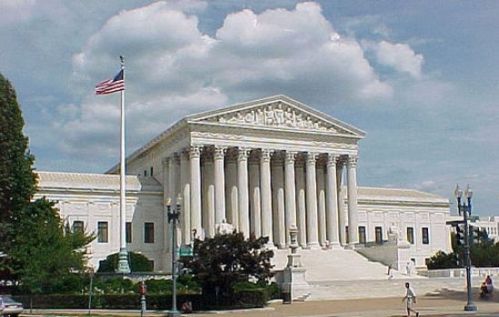
United States Supreme Court

United States Supreme Court

Photo by dbking licensed http://creativecommons.org/licenses/by-nd/2.0/


A little known aspect of the judicial system was made a bit more public recently, as courts have rejected lawsuits challenging the legitimacy of Barack Obama’s presidential election.

Anthony Martin-Trigona, a documented legal system abuser, did it again, filing a lawsuit regarding Obama’s citizenship in Hawaii state court. Federal courts have already imposed rules barring him from bringing any more frivolous claims to their courts.

federal appeals court has previously described Martin-Trigona’s actions and called out the harm caused by people who use our justice system for their own personal agenda without regard to the legal validity of their claims.

“To those who follow the business of the courts, the appellant needs no introduction. He is the source of literally hundreds of lawsuits, motions and miscellaneous pleadings, all but a small fraction of which lack any merit whatsoever. Viewing Martin-Trigona’s litigious conduct in its entirety yields the inescapable conclusion that he persistently resorts to legal processes without regard to the merits of the claims asserted and that he invokes those processes largely to harass persons who have unluckily crossed his path.”

And the 2nd Circuit Court of Appeals continued:

“Martin-Trigona is known to have filed over 250 civil actions, appeals, and other matters throughout the United States, which have been pursued with ‘persistence, viciousness, and general disregard for decency and logic.’  He has used legal pleadings to ventilate his contempt and hatred of persons of Jewish heritage and to level accusations which ‘have often been personal, have often emphasized racial or religious affiliations, and have often involved the members of . . . judges’ and counsel’s families.’ The purpose, nature and effect of his resort to multiple litigation has been to involve as many persons in as many confounding legal processes as possible. . . . Martin-Trigona’s voluminous filings have ‘inundated’ the District of Connecticut and his activities have burdened judicial operations to the point of impairing the administration of justice. Finally, Martin-Trigona has not desisted from his course of vexatious litigation but has expressly stated his intent to file yet more actions.”

Fox News put Martin-Trigona on the air during the campaign to impugn Obama.  The real offense, political positions aside, was that a person known for such extensive and frivolous abuse of the American legal system was given the credibility of broadcast time.

But he is not alone.  Seventeen lawsuits (so far) have been filed in various jurisdictions, claiming Barack Obama was not born a U.S. citizen, and thus, cannot become president.

The facts:

Hawaii achieved statehood in 1959.  Obama was born in Hawaii in 1961.   Obama’s birth certificate, conveying U.S. citizenship and noting birth in Hawaii’s capital, Honolulu, has been examined by the State of Hawaii and found to be authentic.

Case closed.

None-the-less, seventeen individuals have filed suit, and upon rejection of their claims by trial judges, haveappealed as high as the U.S. Supreme Court.  The legal basis of the challenges is Article II of the U.S. Constitution, requiring a president to be a natural-born citizen.  Precious resources are used, briefs read, arguments heard, all to give every possible advantage to litigants who want their day in court.  To date, the U.S. Supreme Court has rejected two petitions that have made it to the court for consideration.

The “natural-born citizen” clause has received publicity in recent years with California Republican GovernorArnold Schwarzenegger, who is an Austrian-born, naturalized U.S. citizen, appearing to emerge as apresidential hopeful, except for Article II.  Discussion was also prompted by the candidacy of Republican Presidential aspirant John McCain, was born in the Panama Canal Zone to a U.S. military family.  McCain, however, was a citizen at birth, via his parents, both citizens and the status of the U.S.-controlled Canal Zone.

Can you imagine challenges to the birth certificates of George W. Bush, William Jefferson Clinton, George H.W. Bush, or Ronald Reagan? 

Boumediene v. George W. Bush

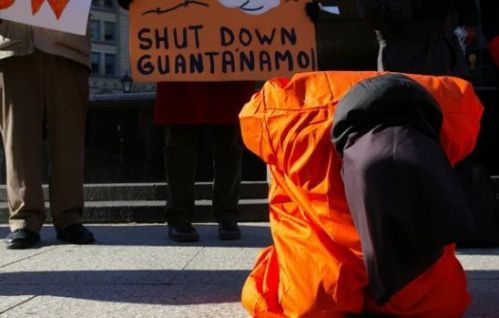
Protesters at the U.S. Supreme Court Wearing Prisoner Jumpsuits

Protesters at the U.S. Supreme Court Wearing Prisoner Jumpsuits

Originally published December 29, 2008 at politics unlocked.com.


In a significant enemy combatant case, Boumediene v. George W. Bush, five men, who have been held at Guantanamo Bay detention facility, have been ordered to be released, while one continues to be detained.

The five released, who had previously been denied an opportunity to challenge their detention in court, owe their freedom in part to a Supreme Court decision earlier this year granting Guantanamo Bay detainees the right of habeas corpus, to challenge their detention is U.S. courts.

After the Sept. 11 attacksPresident George W. Bush, guided by Vice-President Richard (Dick) Cheney and Defense Secretary Donald Rumsfeld, adopted aggressive defense strategies to deal with the nation’s security.  While the administration’s geopolitical approach was to demand cooperation from foreign powers, and eventually to conduct wars in Afghanistan and Iraq, the administration also needed to handle the enemy one by one.

The attacks had shown that a small number of individuals using the element of surprise could cause extraordinary destruction and loss of life.  Fearing more attacks, the administration ramped up its world-wide hunt for terrorists.  As arrests were made, the Bush administration created new procedures for placing those captured into U.S. military detention facilities rather than providing them with the opportunity for civil or military trials.

It was often said that the worst of the worst were placed in a U.S. military prison facility at Guantanamo Bay, Cuba.  The administration took the position that prisoners at this facility were not entitled to a trial or the right to challenge their detention in U.S. courts.  In many cases, the U.S. government refused to allow lawyers to contact prisoners and rarely released the names of persons being held.

Concerned that some prisoners were wrongly held or were subject to torture, yet lacking a good alternative, civil libertarians, lawyers groups, family and friends staged theatrical photo ops outside the Supreme Court, argued their cases in the press and lobbied the government of behalf of the detainees.

Meanwhile, legal appeals to the administration’s position have slowly worked their way through the courts and gradually defined what rights detainees do have.  The courts have not rubber stamped the Bush administration’s plans and have significantly increased the rights provided to detainees.

The Supreme Court ruled in 2008 that Guantanamo Bay detainees have the right of habeas corpus to challenge the legality of their detention.  This right provides judicial review of the government’s decision to designate and hold someone, but does not expressly provide the constitutional protections of a criminal trial.  Further, the Court in another detainee case, Hamdi, indicated that the courts have an obligation to protect prisoners from the risk of erroneous detention.

Under the Supreme Court ruling, six men were given a new hearing before U.S. District Court Judge Richard Leon in Washington, D.C.  They had all been in custody since 2001, when they were arrested in Southern Europe by the Bosnian government for alleged involvement in a plot to bomb the U.S. embassy in Sarajevo.  They were subsequently turned over to U.S. authorities and sent to the U.S. Naval Station at Guantanamo Bay.

A Bush administration appointee, Judge Leon conducted the hearings in private because of the presence of classified information, but the order of the court made public a number of issues in the case.

The Bush administration argued that the defendants had a plan to travel to Afghanistan and fight U.S. and coalition forces there. They made no claims regarding the previously alleged embassy plot.

The detainees, Lakhdar BoumedieneMohamed NechlaHadj BoudellaBelkacem BensayahMustafa Ait Idir, and Saber Lahmar were represented by counsel, who argued that the government had failed to show the six Algerian-born men were enemy combatants.

The Judge first defined an “enemy combatant” as “an individual who was part of or supporting Taliban or Al Qaeda forces, or associated forces that are engaged in hostilities against the United States or its coalition partners.  This includes any person who has committed a belligerent act or has directly supported hostilities in aid of enemy armed forces.”

Judge Leon concluded that the government failed to meet its burden of convincing the court that a plan existed.  The court did not fully elaborate on the reasons for its decision, noting that classified material could not be revealed.

None-the-less, Judge Leon granted the five habeas petitions and ordered those prisoners’ be released.  The court also ruled that a sixth defendant was in fact an enemy combatant based on evidence showing ties to Al Qaeda that was not present in the case against the other five petitioners.  The sixth defendant will remain in military custody.

Photo licensed: http://creativecommons.org/licenses/by-sa/2.0/

Detainee Ali Al-Marri Appeals

Originally published at politicsunlocked.com

thumbnail-3php

photo: creative commons

Supreme Court agrees to hear enemy combatant case.

The United States Supreme Court has agreed to hear the legal appeal of a man imprisoned without trial as an enemy combatant.

The case presents a rare situation where a person suspected of working for the enemy, in this case Al Qaeda, was arrested inside the United States and is being treated like a battlefield capture.  The man, Ali Al-Marri has not been charged with an act of terrorism or any other crime in U.S. courts, although the government has presented a statement of evidence against him.  According to the government’s declaration, Al-Marri met withOsama Bin-Ladin and was instructed to enter the United States to conduct an act of sabotage against financial institutions.

Since operation Enduring Freedom (the U.S. military action in Afghanistan) began in 2001, thousands of Al Qaeda members captured overseas have been imprisoned as enemy combatants.  This is a common practice in armed conflicts and is recognized by international law.  Al Qaeda members have also been arrested in the United States for crimes committed here, such as the 1993 World Trade Center bombing.  In those cases, defendants were charged with crimes and afforded trials according to the rules of our criminal justice system.

The present case is, however, a hybrid.  

Ali Al-Marri was living with his wife and children in Peoria, Illinois and attending computer classes at Bradley University, when he was arrested in 2001.  He was originally treated like a criminal suspect and was incarcerated while awaiting trial.  However, before his trial occurred, he was reclassified by the Bush administration as an enemy combatant and moved from the civilian court system to a South Carolina military prison.  As an enemy combatant, he was not given a trial and was told he may have to wait until the end of the war to be released.

There are two central legal principles in this case.  

First, the executive branch is constitutionally invested with the power to conduct war and secure the national defense. Within this power are decisions about how to handle the capture of enemies.  The judiciary, not the branch of government suited to speed or action, gives the president almost complete authority on such matters of national defense.  In a previous case on detentions, the Supreme Court allowed an American citizen, whose battlefield capture in Afghanistan demonstrated his Al Qaeda affiliation, to be imprisoned as an enemy combatant, stating “detention to prevent a combatant’s return to the battlefield is a fundamental incident of waging war.”

Secondly, because the arrest of Al-Marri was made in the United States, there is serious judicial concern about his detention without trial in light of our national principles of constitutional justice.  The right to confront witnesses against you and be tried by a jury has long been fundamental to our system of justice.  These rights, guaranteed in the Sixth Amendment to our Constitution, were viewed as fundamental by our nation’s founders, who feared the power of Kings and abusive governments to condemn and imprison their political enemies unjustly.

Attorneys for Al-Marri have challenged his detention without trial through a writ of habeas corpus.  This allows Al-Marri to challenge the government’s legal authority to treat him as an enemy combatant. The Court of Appeals for the Fourth Circuit ruled in a 5-4 split decision that the government does have this authority, under the Authorization for Use of Military Force against Terrorists passed by Congress in 2001.  Al-Marri’s Supreme Court petition asks the high Court to overturn the Fourth Circuit decision and reject the government’s enemy combatant classification of him, making him eligible for trial.

While the evidence against Al-Marri and the fairness of process have also been challenged, these questions are still in stages of review by the lower courts.  Thus, the Supreme Court has only, at this point, focused on whether the government has legal authority to detain Al-Marri without trial, rather than any consideration of what evidence should be required in order to do so.


While the case is not likely to apply to many individuals, it certainly has very important implications.  Historically, America is well aware of the internment of Japanese Americans without trial in World War II. A 1980’s court challenge to the government’s WWII internment practice called into question whether the government had been honest in its claims about the risk that Japanese Americans posed, including in representations to the U.S. Supreme Court during the war.

On the other hand, the experience of the government in the 1990’s, prosecuting Al Qaeda operatives responsible for the 1993 World Trade Center bombing, illustrated the great economic cost and commitment of resources required to process just a few individuals through the criminal justice system.  


Originally published at: http://www.politicsunlocked.com/item/detainee-ali-al-marri-appeals

Can We Have Accountability with Our Stimulus?

Originally published at http://www.care2.com/causes/politics/blog

1044957_431


President Barack Obama and the 111th Congress have achieved their goal of creating stimulus legislation to bring aid to the declining economy.  

While both parties agreed that some action was needed to stimulate the economy, the Democratic embrace of public spending did not receive Republican support. Both sides did agree on tax cuts, which put more money in private hands, where it theoretically could be entrusted without fear of misuse.

Remarkably, the stimulus legislation was assembled, debated and negotiated quickly and follows the Bush administration’s $700 billion financial support program, showing both administrations’ willingness to act quickly and boldly–to avoid mistakes made by Depression-era governments.

The public has largely followed party positions with Democrats accepting President Obama’s claims that spending, with accountability, is necessary and proper, and Republicans rejecting public spending beyond the financial bailout as unjustified, except that a significant vocal minority of the public from across the political landscape believe that the government’s management of public funds is corrupt, self-serving, and unnecessary.

The conflict highlights a problem President Obama gave voice to in the 2008 presidential campaign, before the economic crisis captured center state. Many Americans have lost faith in their government. They perceive government as the game board of the wealthy and powerful, where tax revenues and rights to government spending are divided up by lobbyists and their representatives in office.

The truth is likely more complicated.  But Obama campaigned for more openness and accountability in the federal government, and crucially in the government’s use of public funding. Now is the time to make good on those promises.

Both the Treasury plan to support bank balance sheets and real estate values and the new stimulus legislation will only gain legitimacy if the public believes that they are worth the money. President Obama must put great effort into communicating and demonstrating that each dollar was spent wisely, obtained value, and served a public purpose that could not have been achieved otherwise.

This is no easy task. But with such doubt in the responsibility of government and the economic justice of our system, it is necessary. When the crisis ends and President Obama needs to move to the difficult tasks of cutting government spending, including entitlements, and working again towards a balanced budget, such calls for sacrifice by our leaders will require for their success the trust of the American people.

Technology and the Future of Warfare

By Marc Seltzer; Originally published on January 26, 2009, at care2.com/causes/politics/blog

. .

Warfare and its violence are changing in profound ways because of robotic technologies.  Arial drones, essentially unmanned planes, operated by pilots sitting at computer consuls in the United States, are playing a greater and more violent role in warfare in Iraq, Afghanistan and Pakistan.  While initially these drones, with names like Predator, Global Hawk and Pac Bot, were used for surveillance, they are now being used to conduct battlefield operations, including targeted killings.

The new weapons are a natural outcome of technological development and the arms race.  However, they raise fundamentally new questions about the conduct of warfare.  Remotely operated machines that fight our wars present logistical, ethical and psychological challenges new to humanity.  For example, operators of these weapons systems may be trained more by XBox and Play Station gaming experience than by boot camp and military officer’s school. Accidents resulting in civilian casualties in Afghanistan may now be the responsibility of someone working in an office building in California or Nevada.  However, the increased power and savings in lives and resources are speeding these new technologies into our mainstream military operations now.

Radio talk show host Terry Gross recently conducted an important interview with P. W. Singer, author of the new book Wired For War; The Robotics Revolution and Conflict in the Twenty-first Century.  Mr. Singer talks about a world that sounds of science fiction but which is in fact part of current Department of Defense operations.

Listen to the Fresh Air program podcast from January 22, 2009, and begin to participate in this important conversation. This debate will undoubtedly take years to work through, but it must begin across America.

Economy in Decline (part 2 of a 3 part series)


thumbnail-2php

Stimulus legislation comes in at $789 billion.


As the stimulus legislation is formalized into law, the public is still reeling at the price tag.  

Congress has committed $789 billion in new spending and tax relief, as well as the $700 billion already committed in October of 2008 to support failing banking institutions and an additional $2 trillion dollars, proposed by Treasury Secretary, Tim Geithner, to support financial and real estate sector recovery.

Economists from government, academia and business, whose trade is big numbers and abstract concepts, have been at the forefront of analyzing this crisis.  There is fervent activity among economists across the political spectrum and disagreement as to what should be done to solve problems that individually and collectively are not exactly like those faced, studied and dealt with in the past.

A Major Government Effort

A significant number of leading economists agree that stimulation of the economy, as it slows, will help counter the worst effects of its decline. 

This is more than a political concern for the personal hardships of unemployment, foreclosure, bankruptcy and lost opportunity that recessions engender.  The overall cost to the nation in growth, productivity and economic leadership is also significant.

With an economy estimated to lose trillions of dollars in activity because of the credit crisis and recession, only a massive stimulus law could have substantial impact.

Painted with a broad brush, the stimulus bill gives money to the pubic in the form of tax cuts ($282 billion – $400 per individual, $800 per family or $250 in Veterans and Social Security benefits) and increased unemployment benefits.  It increases public spending ($507 billion) on a wide variety of programs including infrastructure, green technology, support for cancer research and education.  It also provides emergency funding to states ($87 billion) to support state Medicaid funding.  

The hope is that this money will keep people employed, spending and receiving services until the worst of the recession is over and private business activity resumes at a level sufficient to increase employment, spending and tax revenue.

Doubts and Fears

The bill is only a part of the government’s efforts to remedy the economic decline, and yes, the price tag is staggering. 

Despite fears about the economic decline, many Americans have expressed concern and outrage at the scale of public spending, fearing that the money will be wasted and that increasing the deficit will pass the buck for fiscal responsibility to our children and grandchildren.  

Some accept the tax cuts as needed for stimulation of the economy, preferring money in private hands to government spending.  The abrupt increase in public spending also raises fears of inflation in the long run, even as deflation from falling prices and incomes is the current worry.

Among supporters, there is the belief that money lost from the private economy should be made up at least in part through public and private spending, but also that public services have been shortchanged and commitments to public education, green initiatives and infrastructure will improve the nation and lives of citizens.

Costs and Benefits

The real aim of the legislation is to stabilize the economy by supporting business activity through the most dangerous phase of the slowdown.  President Barack Obama has spoken of keeping the recession from spiraling downward as more layoffs cause more foreclosures and drops in personal and business spending, eventually leading to more businesses closing their doors and a snowball effect of economic contraction.

An alternative to this action is to accept dramatic decreases in economic activity with resulting unemployment, business closures and cuts in government services and wait for the eventual economic recovery.  

While this approach would risk less in the way of upfront public spending, current leaders feel that to do nothing or only cut taxes, when the risk of long-term economic decline is significant, would be to repeat the mistakes that led to the Great Depression, which lasted more than a decade.  Other proposals, such as one for a short-term capital gain tax waiver to stimulate reinvestment and market confidence were ignored in this bill, but remain available to a government firmly committed to fighting large-scale economic collapse moving forward.

From this perspective, the aggressive action taken by Federal Reserve Chairman Ben Bernanke, Treasury Secretaries Henry Paulson and Geithner, President Obama and two Congresses seem promising.   

The government is being responsive, bold and aggressive.  Now, whether it will work, remains for the future to tell. 

Economy in Decline (part 1 of a 3 part series)


thumbnail-1php1

More evidence surfaces in spite of Bush tax cuts, bank support and lower interest rates.


With more bad economic news pointing toward bank failures, business closures and layoffs, politicians on both sides of the aisle are crafting plans to aid the economy.  As the recession teeters on the brink of an even deeper slump, politicians are reaching for ever-larger and less traditional solutions.

The next few weeks will unleash an unprecedented national recovery program.  This three part series will examine the problems, proposed solutions and politics of the economic crisis.

What We Know


While Republicans and Democrats certainly have different philosophical beliefs about the causes, both sides agree we are in a severe recession.  The growth rate of the economy has fallen (by 3.8 percent annual rate last quarter) and unemployment is now rising significantly as a result.  This recession is more precarious than many others in that the failings of two specific industries, the financial industry and real estate, have seen extreme shifts and have threatened to slow other sectors of the economy dramatically beyond a “normal” recession.


The financial industry collapse is particularly devastating because it is restricting financing to consumers and businesses, which must further curtail their activity to avoid risking hardship and failure.  The deflation in real estate has undermined American wealth and confidence since so many counted their home as a no-risk asset and investment vehicle. 

Stakes Are High


Economists fear that the speed, breadth and worldwide scope of decline could lead to a downward spiral in world economies.  Markers of this decline include extremely high unemployment rates, poor business confidence and long-term economic stagnation with low or negative GDP growth.  The decline in gross domestic product for the U.S. in the first quarter of 2009 is already anticipated to be at a -5 percent annual rate.

The choices for private businesses under stress are limited.  Either downsize and try to weather the economic storm, file bankruptcy and try to maintain operations in a leaner structure, or shut down.  In some cases, the writing is on the wall; in others, it depends on how long the recession lasts.

In the face of this economic distress, the Bush administration moved to support the economy as a whole and the institutions in greatest risk of failure.  Interest rates were lowered to promote borrowing for future business activity.  Taxes were lowered so the public could spend more.  Controversially, banks were given public funds to keep them in business.


What We Don’t Know


Unfortunately, neither interest rate cuts, tax cuts, nor bank bailouts have stopped the decline.  It is not just the fact that government action can take many months or years to filter its way through the economy and show up in statistics.  In the immediate term, the banking system continues to fail, the real estate market continues to worsen and the economy stands on the doorstep of a significant period of decline.  

Adding to these larger-than-life issues is the fact that many Americans are facing the reality of large-scale layoffs.

No recovery can occur until the banking crisis and real estate decline have stabilized.  These problems require extraordinary solutions that will be costly, uncertain and politically unpopular.   Yet, only once a permanent fix has been set in place, can the government’s plans for stimulus have meaningful effect.

The next parts of this series will focus on the Obama administration’s banking and real estate fixes, as well as the Congressional stimulus proposals and their effectiveness at returning the economy to health and prosperity.

The Obama administration has promised to present proposals on these issues in coming weeks.